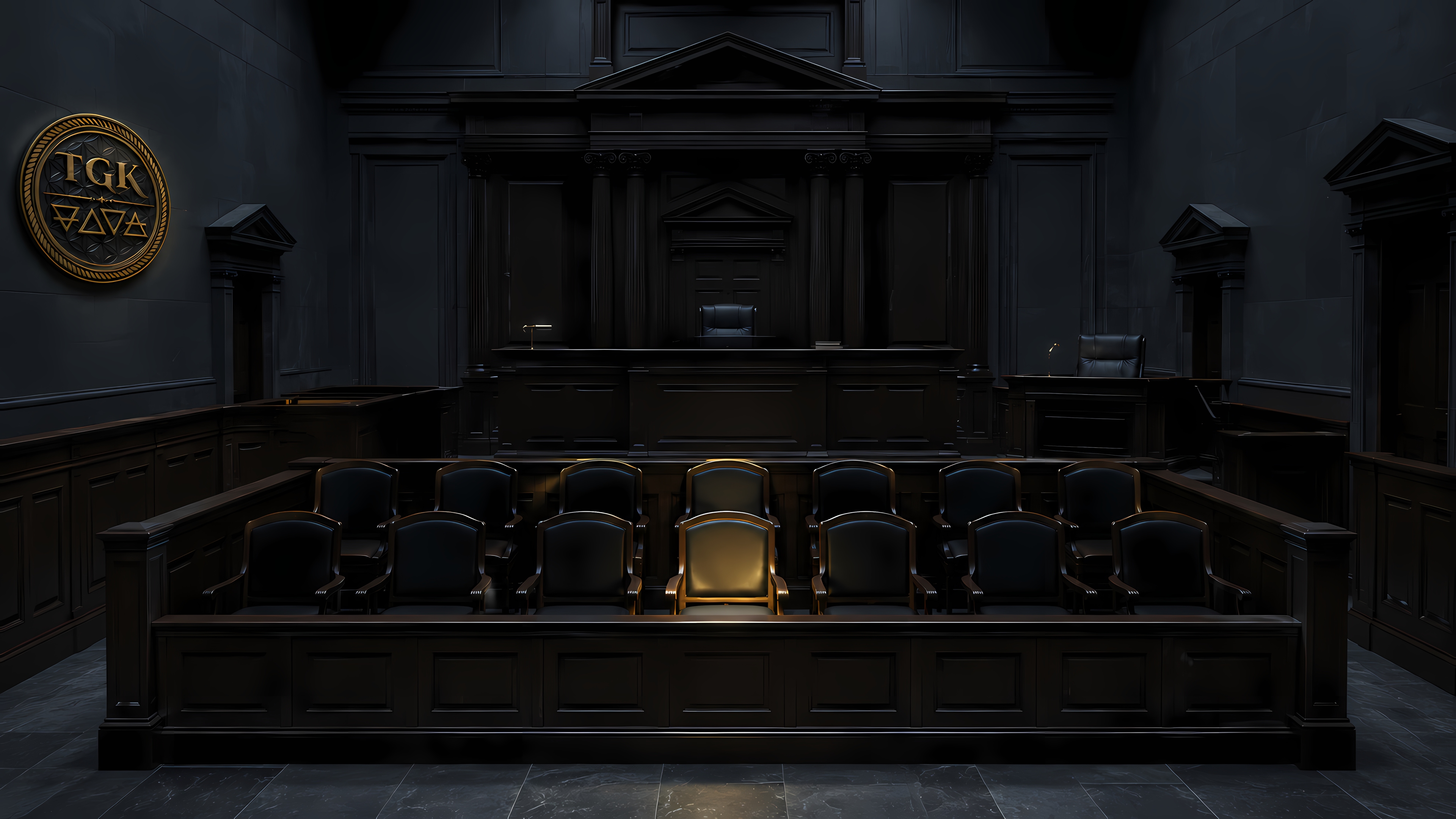
The Nullification Spell
Jury Equity is the buried power of ordinary people to refuse the expected verdict when conscience judges that the machinery has outrun legitimacy. The phrase is contentious. Courts do not like to advertise it. Judges do not direct juries in those terms. Prosecutors do not celebrate it. Yet the structure remains. Twelve citizens are placed inside the ritual, sworn into the process, and then given a verdict that does not require reasons. In that silence, conscience can still move. [1] [8]
In a system under visible strain, that matters more, not less. When legitimacy appears to drain away, power leans harder on script. Procedure grows stricter. Public speech around juries becomes more anxious. The machine can tolerate argument between barristers because that argument still takes place inside the room and under its rules. What it may fear most is something simpler: a jury that hears the script and still says no.
The Nullification Spell is not a fantasy about secret powers. It is the remnant of an older constitutional truth: that the jury is not merely a fact-finding appliance, but a civic conscience mechanism. Modern institutions preserve the shell while downplaying the spirit. This episode examines that contradiction, and why the contradiction is now becoming harder to hide.
A note on method
This episode stays with reported judgments, official guidance, legislation, and visible procedural design. The claim is not that juries operate outside the law, but that the law still contains a conscience interval which modern institutions often preserve structurally while muting rhetorically.
TL;DR
Continue reading
This episode continues inside TGK
Unlock the full text, downloadable PDF edition, and the wider archive by signing in or becoming a member.