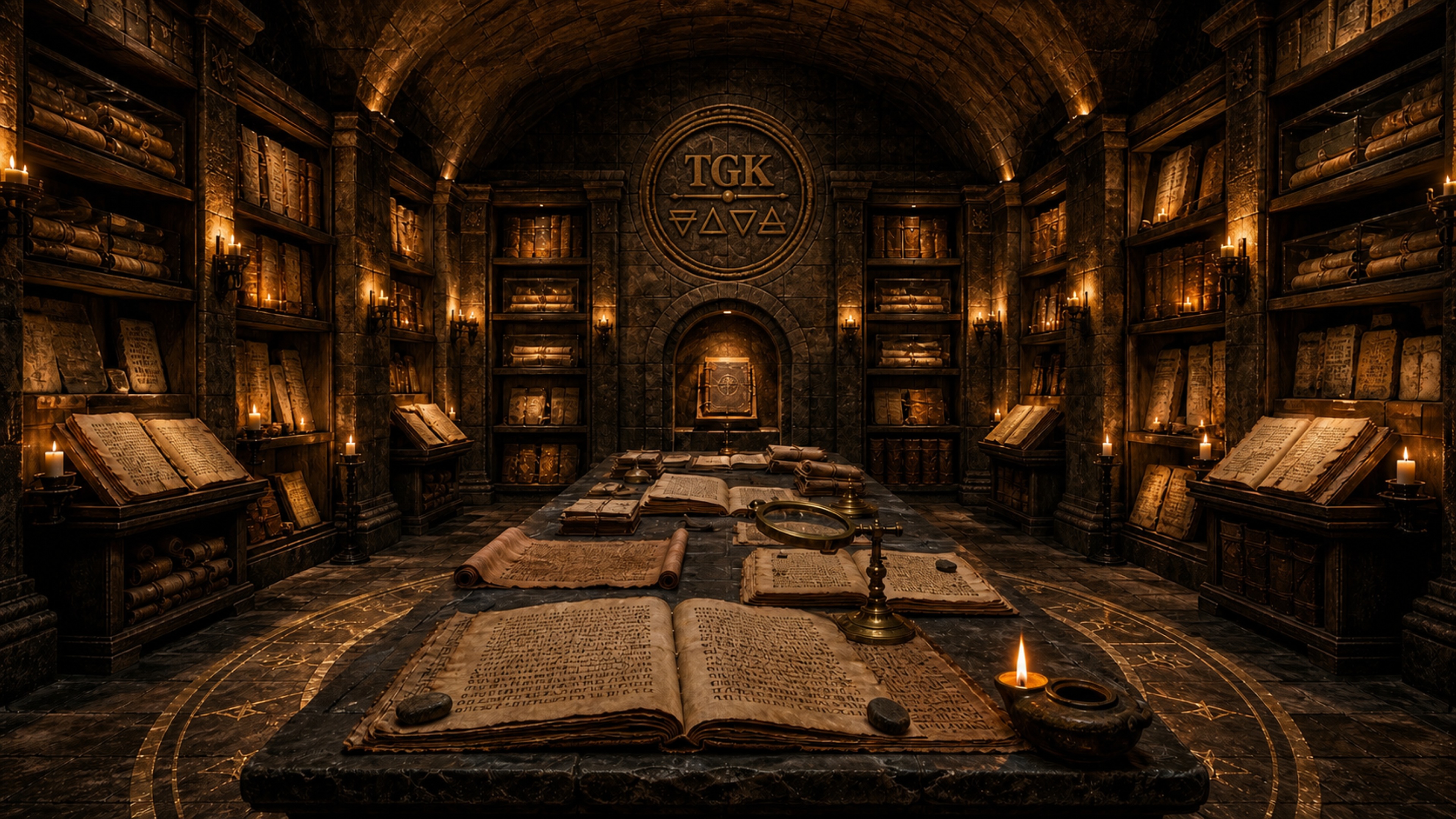
Nag Hammadi Library
Thirteen codices uncovered in 1945 that reshaped the understanding of early Christianity.
Codex Reborn gathers recovered Gnostic gospels and related apocrypha for direct reading.
These are texts that sit outside, or on the margins of, the later Christian canon: buried, neglected, or actively suppressed as orthodoxy consolidated its authority, now restored for study with minimal alteration beyond structural clarity.
Currently live: texts across 2 major codex collections. Nag Hammadi coverage is 52 of 52 texts (100%), with 13 codices live. Pistis Sophia queued for a future release.
The collection draws primarily from the Nag Hammadi Library, the most significant recovery of Gnostic material in modern history, alongside the Berlin Codex and, in time, the Pistis Sophia corpus.
The texts gathered here were not lost by accident. The consolidation of Christian orthodoxy in the second to fourth centuries involved active decisions about which writings were authoritative, which were heretical, and which were to be suppressed. The result was that entire currents of early Christian thought (communities organised around revelation, knowledge, and a more complex cosmology) were written out of the record. What survived did so largely through concealment: buried in the Egyptian desert, preserved in isolated monastic libraries, or copied in fragments that only later found their way to scholars.
The Nag Hammadi discovery of 1945 returned more than fifty tractates to readable condition in a single find. These include some of the most important documents in the study of early Christianity: the Gospel of Thomas, the Apocryphon of John, the Gospel of Truth, and dozens of other texts that illuminate traditions once dismissed as peripheral or invented. Read alongside canonical scripture, they do not replace it; they contextualise it, showing the range of questions early believers were asking and the variety of answers they gave.
Within The Vault, Codex Reborn presents these texts in a format designed for direct reading and careful comparison. Translations are reproduced with full attribution. Structure is preserved and clarified where the manuscripts allow; gaps and fragmentary passages are noted rather than filled. The collection expands in waves as individual codices are completed and formatted for the archive.
Choose your first doorway. The Nag Hammadi Library gives the broadest recovered field. The Berlin Codex offers a tighter, more focused witness.
| Collection | Start here if you want | What it gives you | Current scope |
|---|---|---|---|
| Nag Hammadi Library | The broadest recovered field | Seven codex hubs spanning the densest body of early Gnostic and related texts currently published in the Vault. | 13 codex hubs live, 0 coming soon, 52 of 52 texts live, 0 not yet published |
| Berlin Codex | A shorter first doorway | A smaller manuscript witness centred on the Gospel of Mary and the Berlin stream of revelatory texts. | 1 text live |
| Pistis Sophia | Sophia material outside Nag Hammadi | A later revelatory text that expands the Sophia stream beyond the recovered Nag Hammadi codices. | Coming soon |
33 episodes live • 53 sacred texts free • 4 multi-season arcs in production.
Free access opens the investigation. Paid membership unlocks the deeper episodes, community discussion, and the full archive as it grows.
Thirteen codices uncovered in 1945 that reshaped the understanding of early Christianity.
The Coptic codex containing the Gospel of Mary and texts of the hidden Christ.
Template route prepared for publication of the Pistis Sophia source text in Codex Reborn.