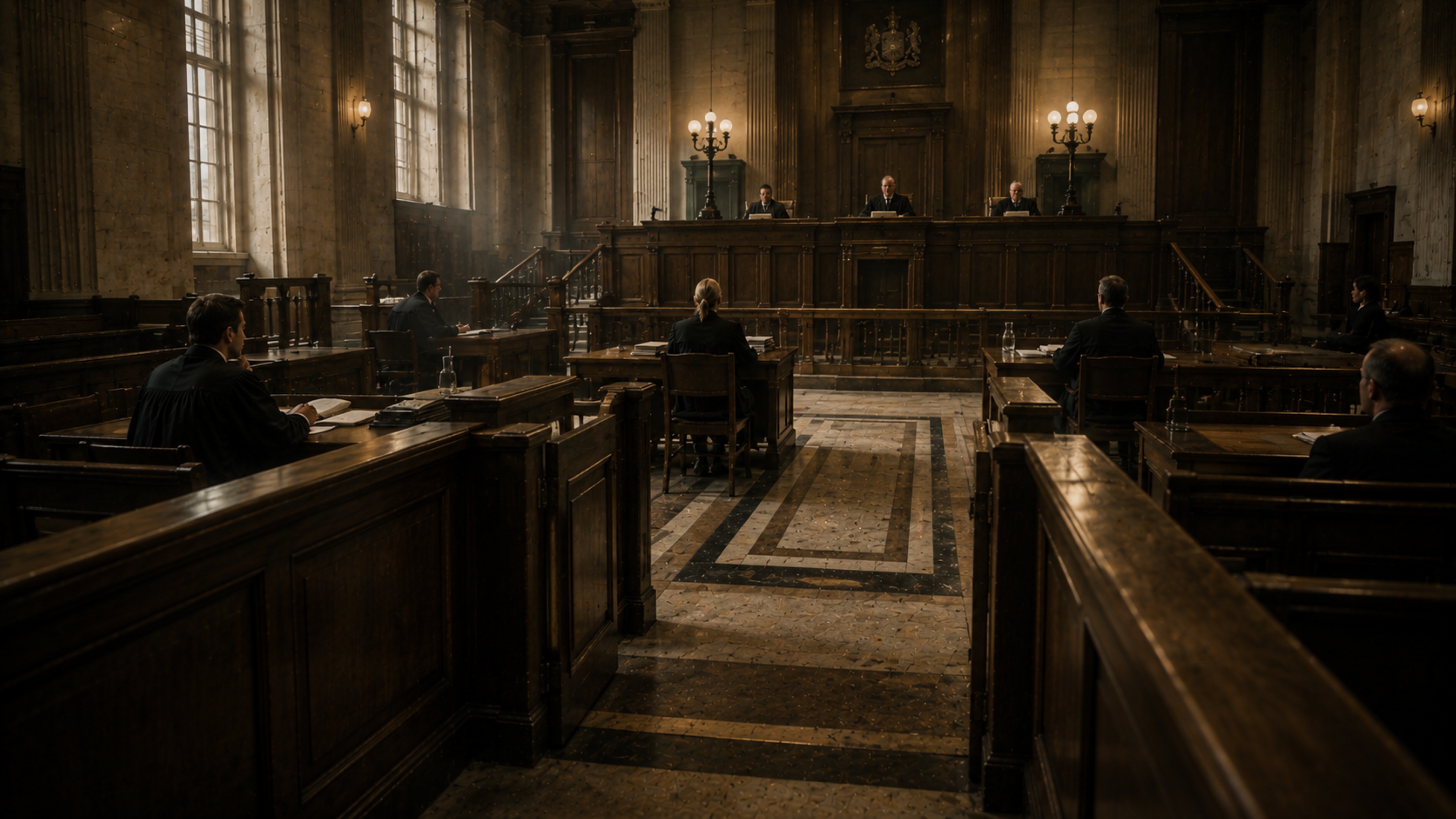
Courtroom Alchemy
A courtroom exists to turn contested allegations into decisions that carry legal force. Evidence is presented, arguments are tested, choices are made and, eventually, an outcome is recorded. That process requires rules. People have to know when they can speak, what decision is being made, what options are available to them and what follows from the choice they make.
The machinery is visible. The raised bench, the dock, the formal language, the order in which people speak, the questions they are asked and the decisions they are required to make are all part of the ordinary courtroom. Because they are ordinary, it is easy to treat them as furniture rather than as part of the process itself.
Research on defendant participation has identified barriers that can affect how people understand and engage with criminal proceedings [1]. The guilty-plea framework also creates a deliberate sentencing incentive to plead at an earlier stage. The greatest reduction is available at the first stage of proceedings and the available reduction generally becomes smaller as the case moves towards trial. At the same time, the Sentencing Council expressly states that nothing in the guideline should be used to put pressure on a defendant to plead guilty [2].
Neither of those things proves that courtroom procedure is inherently coercive. They give us a more precise question to investigate. When does formal participation tell us less than we think about meaningful participation? A choice can be legally recognised while still being shaped by what a person understands, what advice they can obtain, how much time they have, what alternatives are realistically available and what consequences attach to each option.
Courtroom Alchemy examines that gap. The alchemy is the transformation of a contested allegation into a legally binding outcome. The question is what happens inside that transformation, which safeguards are supposed to protect the person moving through it, and where pressure, misunderstanding or constrained choice can remain despite them.
Episode I, The Erosion Code, asked what powers the state has and where the law places limits around them. Episode II, Forensic Fictions, asked what evidence can support and what happens when uncertainty is lost, obscured or overstated on the way to a legal conclusion. Episode III follows the next step. Once law and evidence arrive inside the courtroom, how does procedure turn contested material into an enforceable result?
TL;DR
- Procedure is part of the machinery. Courtroom layout, formal language, speaking order, plea decisions and case-management rules do more than organise a hearing. They shape how people move through it and where decisions are made.
- Formal participation is not always meaningful participation. Research has identified barriers that can affect how defendants understand and engage with criminal proceedings, while the courts also operate safeguards intended to recognise and reduce those difficulties.
- Guilty pleas carry a real sentencing incentive. The reduction for an early guilty plea is deliberate and substantial, but the Sentencing Council also states that the guideline must not be used to pressure a defendant into pleading guilty. The question is what that incentive means in practice when choice is already constrained by time, advice, risk and circumstance.
- Representation matters. Legal aid, access to advice, duty-solicitor provision and the ability to understand procedure can materially affect how a defendant navigates the choices placed in front of them.
- The question is what survives the safeguards. Courtroom Alchemy asks where pressure, misunderstanding or constrained choice can remain inside a system that already contains rules intended to protect participation, fairness and the right to challenge the case.
This episode continues inside TGK
Unlock the full text, downloadable PDF edition, and the wider archive by signing in or becoming a member.
The conversation is not behind the paywall
Read the public Community discussion around this episode for free. No account required.
Posting, voting and other participation still require a free account.
Prefer the full text now? You can buy this part and keep a permanent offline edition.
Members and Founding Members pay £2.49, applied automatically at checkout when signed in.