
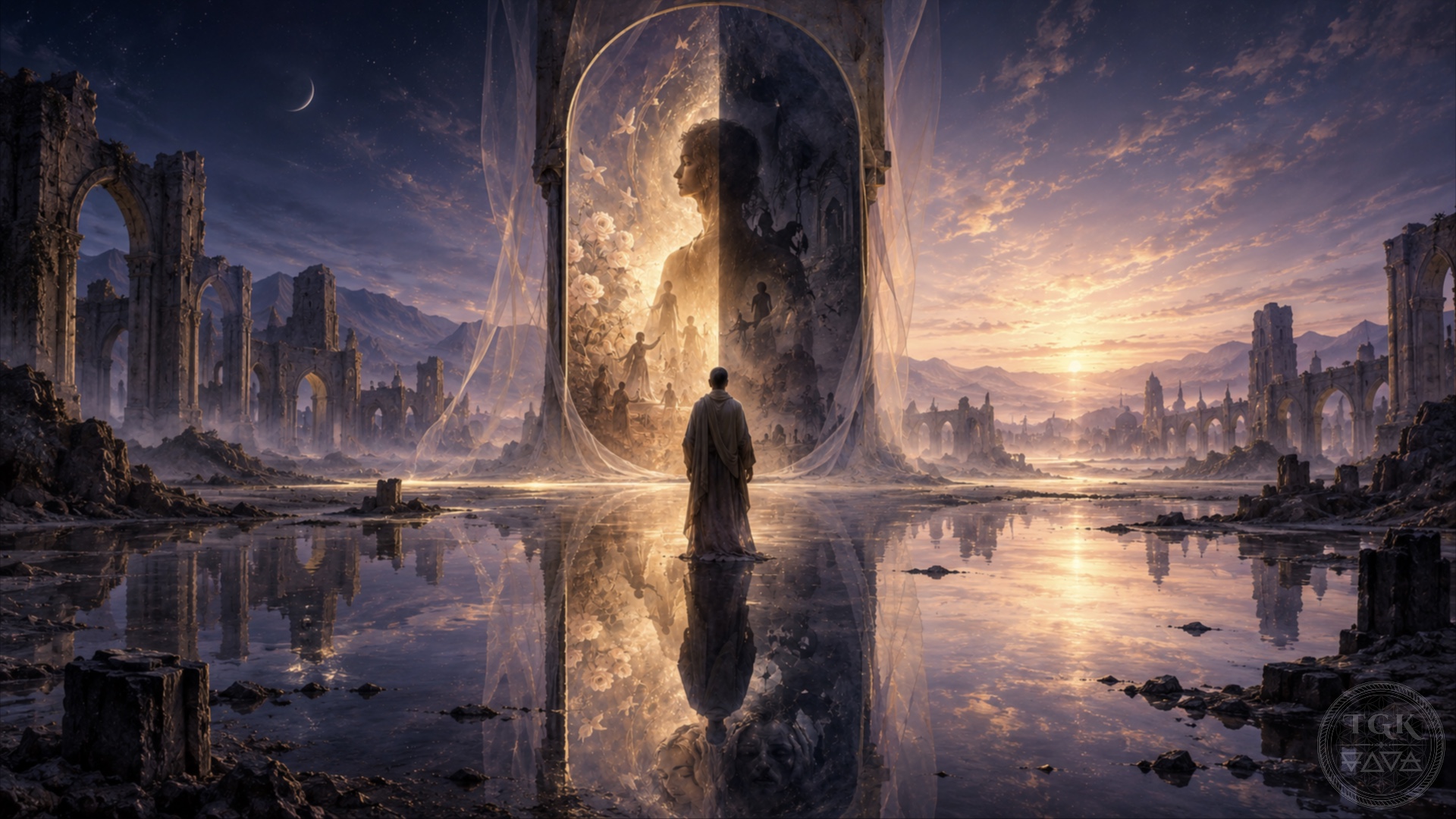
Chapter 2: The Fire That Purifies
قَدْ أَفْلَحَ مَن زَكَّاهَا وَقَدْ خَابَ مَن دَسَّاهَا
“Successful is the one who purifies the soul, and lost is the one who corrupts it.”
Qur’an 91:9, 10
In Barzakh, you see yourself. But what comes next is the burning away.
Sufi masters say: the soul cannot rise while carrying the weight of ego, arrogance, greed, or attachment. These are not presented merely as offences awaiting punishment. They are impurities incompatible with light.
Al-Ghazālī compared the soul to a tarnished mirror. The fire doesn’t destroy the mirror; it removes the rust.
Think of gold in a crucible. What melts off was never gold. What remains is the essence.
“If you are irritated by every rub, how will you be polished to brightness?”
Rūmī
This is why Sufis chant: “Die before you die.”
Purify yourself now, and the afterlife will hold no terrors.
Wait, and the divine surgery will begin without your consent, but still, in mercy.
The fire is not punishment. It is preparation.
TL;DR
- The Soul Must Be Refined: In this tradition, only light rises. Ego, attachments, and falsehoods burn away.
- Divine Fire ≠ Hellfire: This is not rage or revenge; it’s the alchemy of mercy.
- Al-Ghazālī’s Mirror: The soul’s mirror is polished to reflect divine light fully.
- “Die Before You Die”: Purify now, and the next world will greet you as a friend, not a furnace.
- What Survives the Fire is Real: Your essence is indestructible. Only the illusions perish.
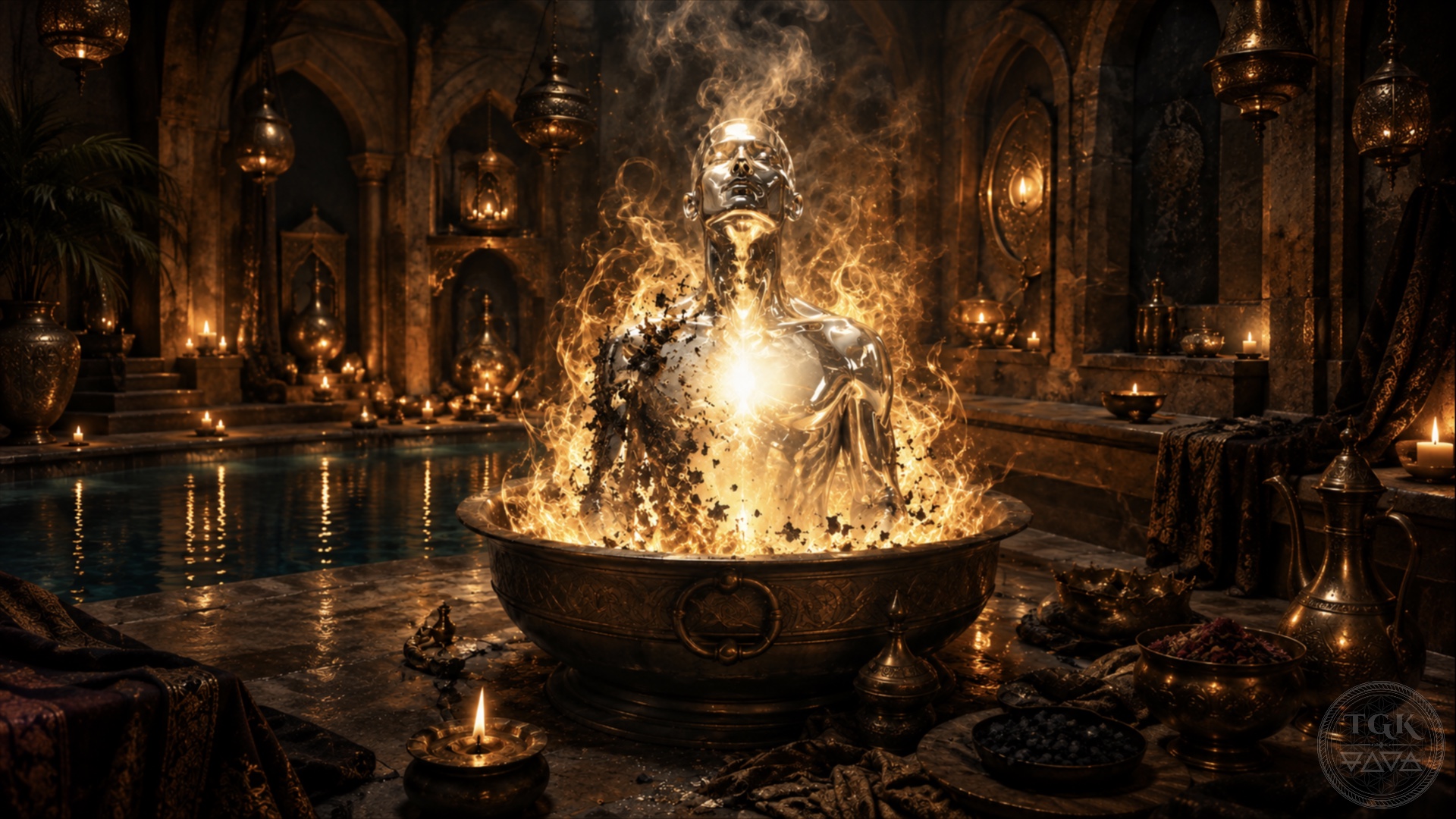
Chapter 3: The Ascent Through the Heavens
وَنَحْنُ أَقْرَبُ إِلَيْهِ مِنْ حَبْلِ الْوَرِيدِ
“And We are closer to him than [his] jugular vein.”
Qur’an 50:16
The soul, now purified, begins to rise. This is not merely a story. It is the miʿrāj, the ascension through subtle realms, mapped in the Prophet Muhammad’s Night Journey and echoed in every lover’s path.
The Miʿrāj, the Prophet Muhammad’s mystical ascent through the heavens, is not only a historical event in Islamic tradition, but also a universal archetype. In Sufi interpretation, it reflects the soul’s inner journey from earthly separation to divine nearness. Each realm the Prophet traversed mirrors a stage of remembrance and unveiling.
Sufis describe three great layers of ascent:
- Malakūt, the angelic realm, a world of harmony and balance
- Jabarūt, the realm of power, awe, and divine attributes
- Lāhūt, the pure presence of the Divine, the realm beyond veils
Each stage peels off a layer of illusion. Each height strips away a false identity. This is not about moving upward in space; it’s about nearness.
In Ibn ʿArabī’s metaphysical vision, the path is not a movement from one physical location to another, but a passage from veiling to unveiling.
“Why should I fear? When was I less by dying?”
Rūmī
With each ascent, the soul lets go, until only remembrance remains. Until only love remains. Until only God remains.
TL;DR
- The Miʿrāj of the Soul: The journey through realms of light: Malakūt, Jabarūt, Lāhūt.
- Veils Fall Away: This is not distance; it’s unveiling. You rise by letting go, not by striving.
- Angelic and Divine Stations: Each realm offers awe, remembrance, and increasing nearness to the One.
- Ibn ʿArabī’s Teaching: The path is inward, not outward. You are peeling off layers to return home.
- Fear Falls Away: The soul realises: there is nothing to lose, and everything to reunite.
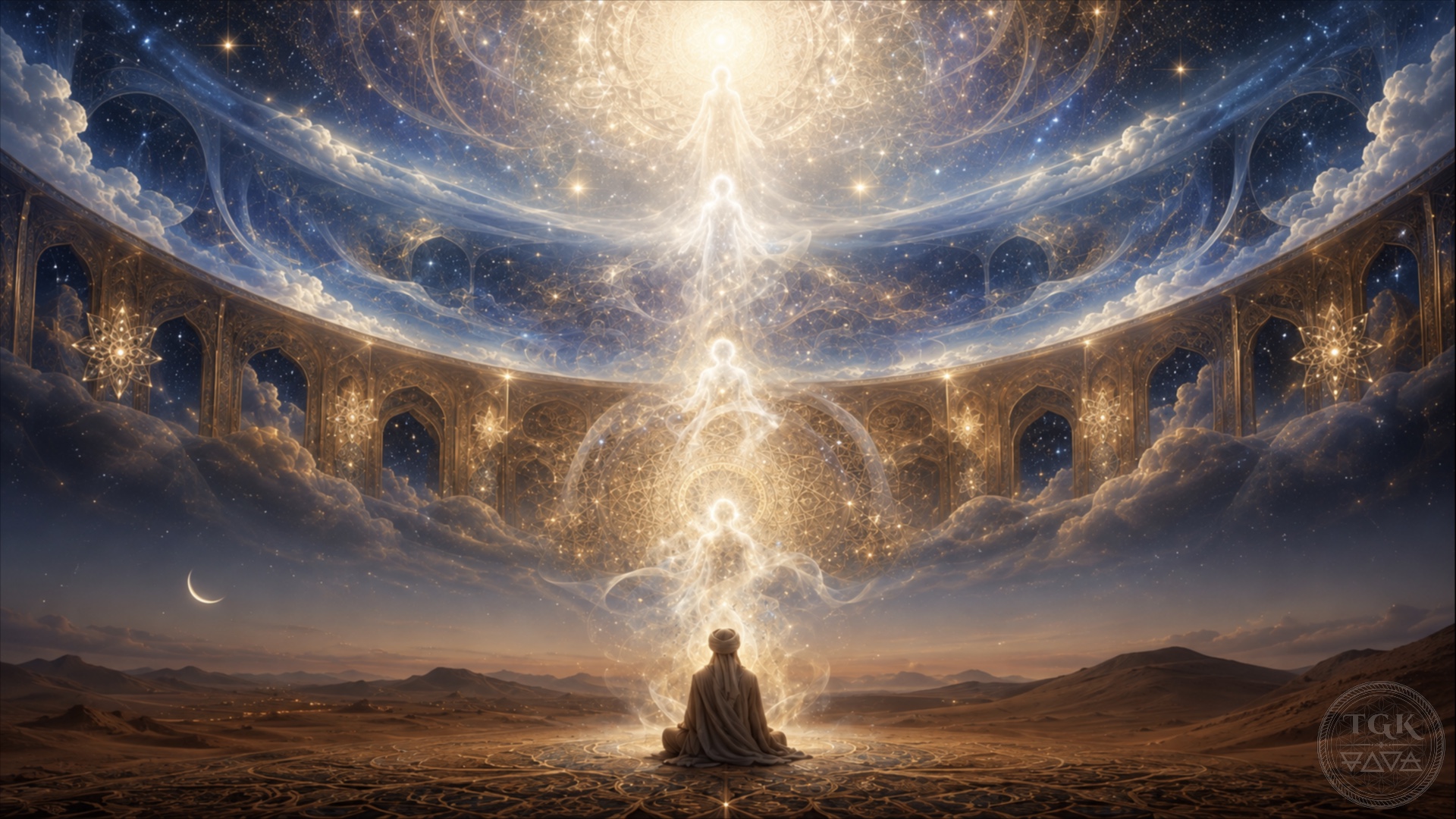
Chapter 4: Fanāʾ, The Death of the Self
كُلُّ شَيْءٍ هَالِكٌ إِلَّا وَجْهَهُ
“Everything will perish except His Face.”
Qur’an 28:88
At the end of ascent comes fanāʾ: the annihilation of the ego, the shattering of the separate self.
This is not death of the body. It is the death of illusion.
The Sufis say: the drop does not disappear. It dissolves into the ocean.
“I searched for God and found myself. I searched for myself and found only God.”
Ibn ʿArabī
In fanāʾ, you no longer say “I love God.” You say, “There is only love.” You no longer say “I seek God.” You realise, “There was no distance.”
Personality, opinion, identity, they melt away. What remains is the capacity to reflect Divine Light, no longer obscured by the claim of a separate and self-sufficient ego.
This is the paradox. The more you surrender, the more you become. But the “you” that remains is pure presence.
TL;DR
- Fanāʾ = Ego Death: The annihilation of the false self in the presence of God.
- Not Disappearance, Dissolution: The drop dissolves in the ocean, not lost, but completed.
- Ibn ʿArabī’s Realisation: Seek God, find self; seek self, find God, until the two vanish in unity.
- The False Self Falls Away: What survives is the soul’s capacity to reflect the Divine without the obstruction of ego.
- This is the Lover’s Fulfilment: The Beloved is no longer separate, love becomes the only reality.
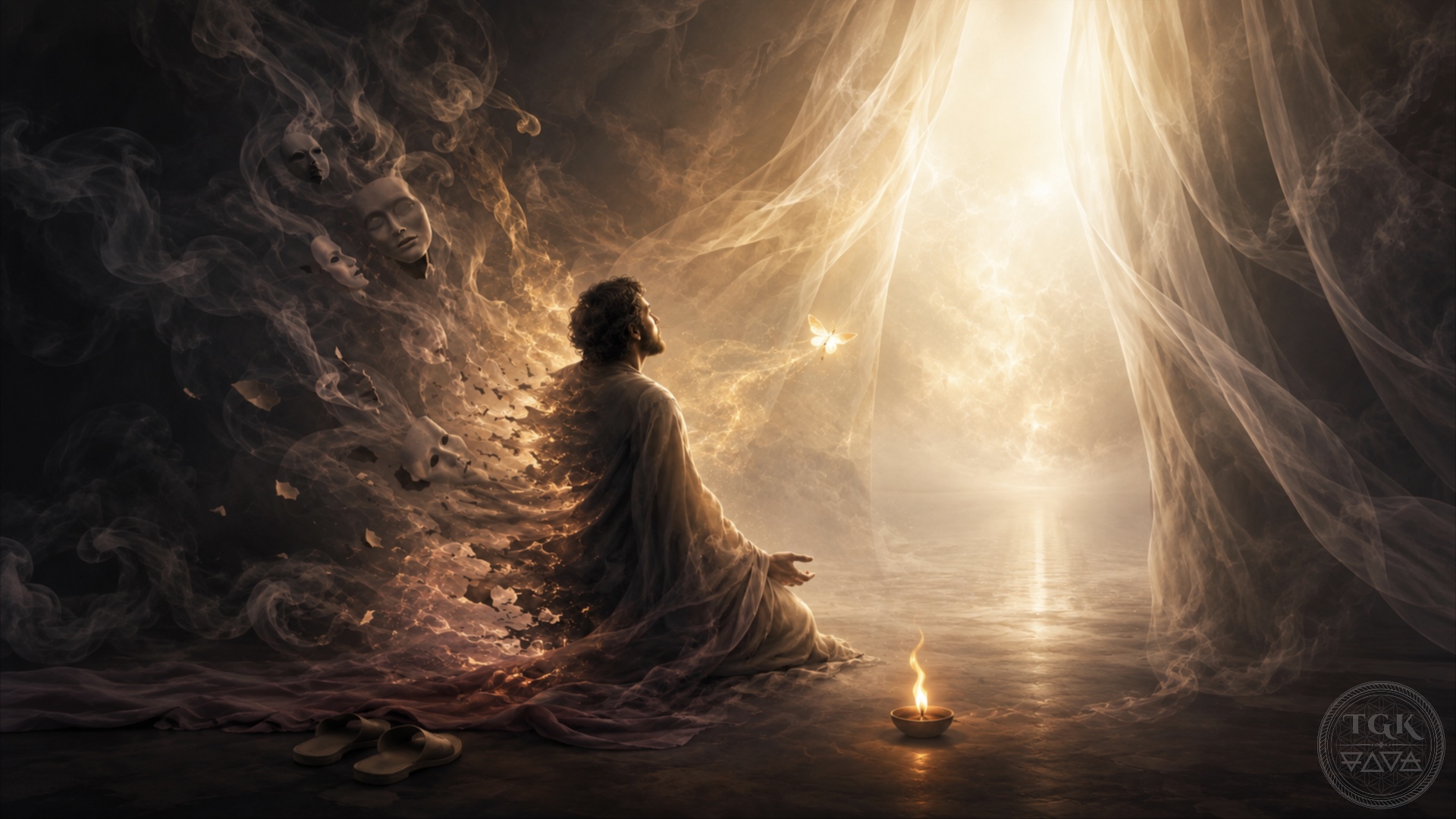
Chapter 5: Baqāʾ, Eternal Abiding in God
يَا أَيَّتُهَا النَّفْسُ الْمُطْمَئِنَّةُ ٱرْجِعِي إِلَىٰ رَبِّكِ رَاضِيَةً مَّرْضِيَّةً
“O tranquil soul, return to your Lord, pleased and pleasing.”
Qur’an 89:27, 28
After the melting of fanāʾ, the soul does not vanish; it abides. This is baqāʾ: eternal life in God, not as ego, but as a mirror of the Infinite.
The self is no longer a seeker. It has become a vessel. The light that once seemed “other” now radiates through it.
“The soul is here for its own joy, radiating the Beloved’s beauty.”
Rūmī, Masnavi, Book IV. [4]
In this state, there is no striving, no distance, no identity to defend. Only presence. Only unfolding. Only divine delight flowing through form.
What Sufis call baqāʾ is not simply a fixed paradise or external reward. It is a living radiance, the lover now is the love.
TL;DR
- Baqāʾ = Eternal Abiding: The soul lives on in divine presence after ego-death.
- Not Disappearance, Radiance: The soul becomes a vessel of joy, light, and remembrance.
- The Lover Is the Love: No longer seeking. Only presence remains.
- Rūmī’s Insight: The soul’s joy is not external; it is divine beauty unveiled.
- Paradise as Presence: The emphasis falls not only on place, but on an ever-renewing state of nearness and abiding.

What part of your false self is ready to die?
You’ve walked the Way of the Sufi, silence, turning, veiling of self, and the unspoken presence of the Beloved. Now we ask:
What truth is waiting to rise?
- Which attachments or identities feel heavy on your soul?
- What would surrender look like for you today?
- Have you glimpsed moments of fanāʾ, where ego dissolved and only presence remained?
- What would baqāʾ mean if it walked beside you now?
Share using #TheGnosticKey and tag @thegnostickey.
Your words may unveil the path for another wanderer.
Quiz
Can you see through the veil of Part I?
Sources & Study Path
Foundational Sufi works on Barzakh, purification, fanāʾ and imaginal ascent, from classical masters to modern scholars.
References
-
[1] Iḥyāʾ ʿUlūm al-Dīn, Abū Ḥāmid al-Ghazālī
:Classical manual of inner sciences; includes the Book of Death and Afterlife.
-
[2] Futūḥāt al-Makkiyya, Ibn ʿArabī
:A vast mystical cosmology describing Barzakh and the stations of proximity.
-
:Reflections on the perfected human as divine mirror; fanāʾ and baqāʾ.
-
:Poetic teachings on love, fire, surrender and transformation.
-
[5] Kashf al-Maḥjūb, ʿAlī Hujwīrī
:Persian treatise describing stages of unveiling and purification.
Scholarly Sources & Translations
- Annemarie Schimmel (1975). Mystical Dimensions of Islam. UNC Press.
- William Chittick (1989). The Sufi Path of Knowledge. SUNY Press.
- Henry Corbin (1969). Creative Imagination in the Sufism of Ibn Arabi. Princeton University Press.
- Sachiko Murata (1992). The Tao of Islam. SUNY Press.
These sources are provided for verification, study and context. They represent diverse perspectives and are offered as reference points, not as doctrinal positions.
Link unavailable? Paste the URL into web.archive.org to find an archived snapshot. Most sources in our evidence packs are preserved there.
Read Alongside
Open Discussion
Every argument in this piece is open to challenge. Bring primary sources, counterexamples or a better interpretation: the Community exists to test this work, not to validate it.
Own This Part
Keep a permanent offline copy of this part, with the full text and the complete formatted edition ready to download.
Members and Founding Members pay £2.49, applied automatically at checkout when signed in.
Episode Artwork
View the curated episode artwork collection, with personal-use digital downloads available through the TGK Shop.
Support The Gnostic Key
The Gnostic Key is independently researched, written, and built. If the work has value to you, you can make a one-off contribution to help keep TGK independent.