


⚡The Erosion Begins
In the United Kingdom, our rights are increasingly treated as permissions, granted and revoked by a State that claims necessity. What were once defended as core liberties, freedom of speech, the right to protest, privacy, access to justice, have been narrowed by statute, guidance, and enforcement culture.
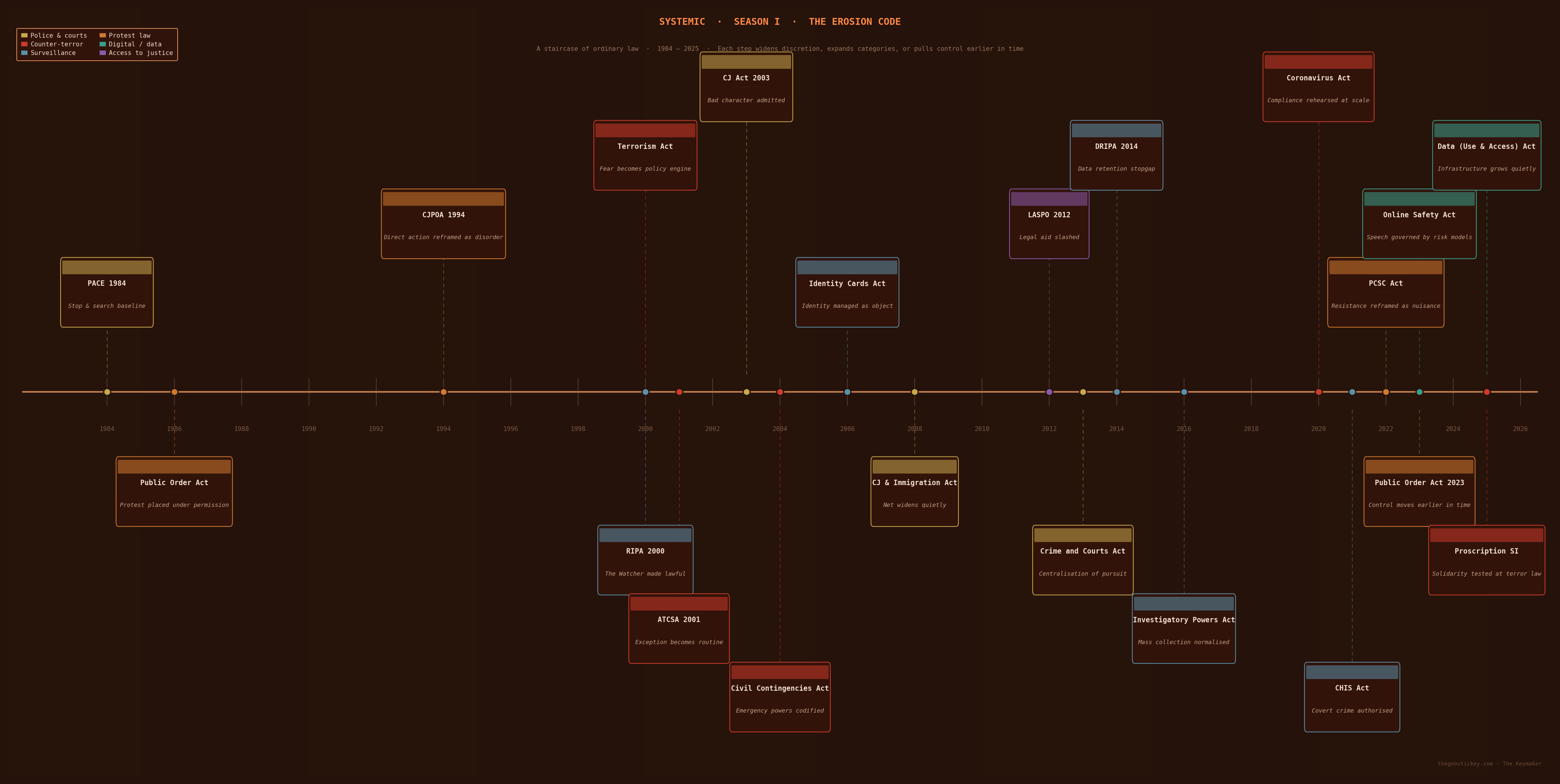
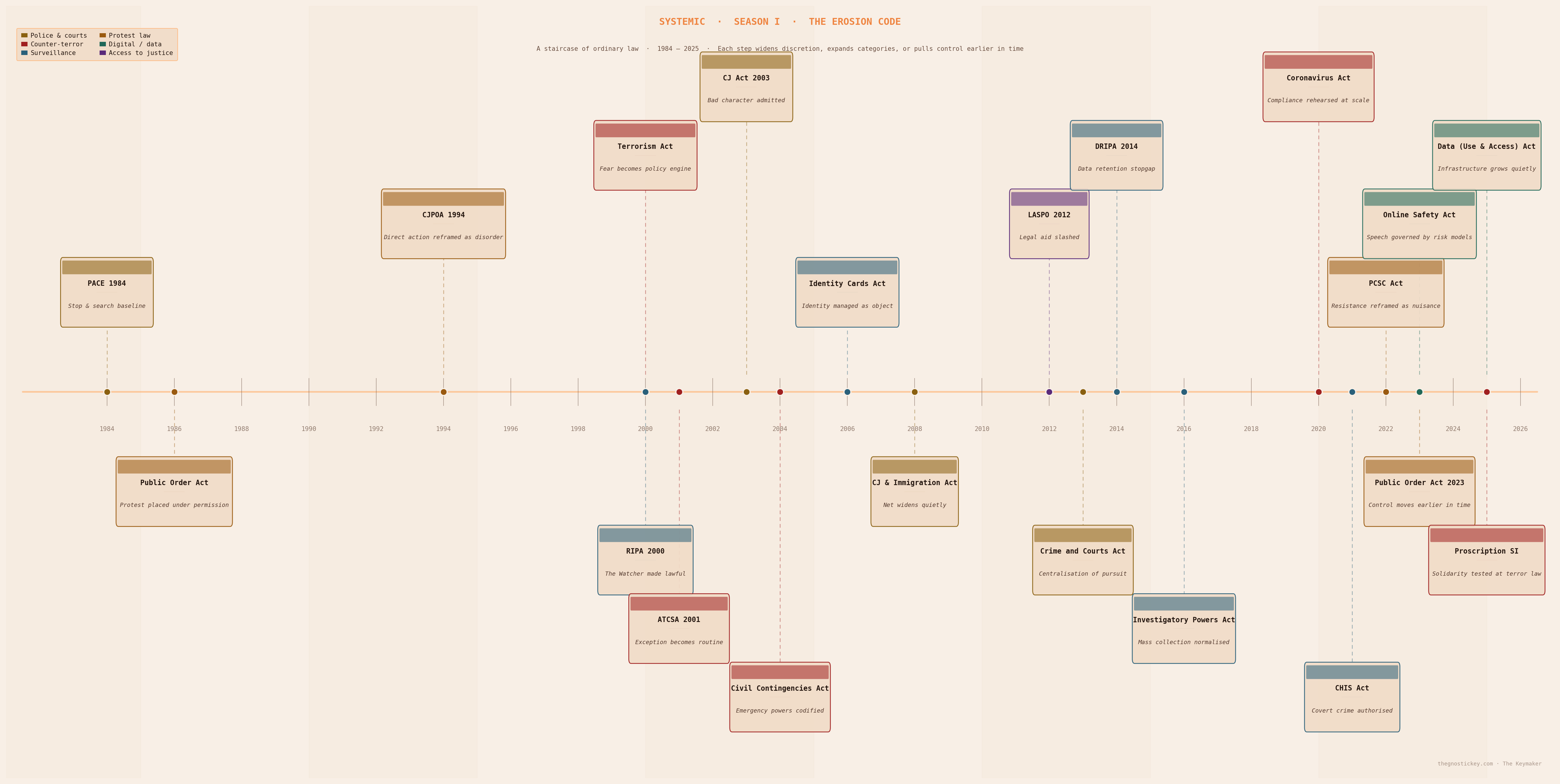
This is not a single-party story. It is an accumulation. A staircase. Each decade adds tools. Each crisis supplies language. Each new category, terrorism, disruption, harm, extremism, expands the field of what can be policed.
In July 2025, Palestine Action was proscribed under the Terrorism Act 2000. The proscription came into force at 0001 on 5 July 20251. The challenge first moved through route and scrutiny arguments in the Court of Appeal2, and by 13 February 2026 the High Court ruled the ban unlawful, with the order held pending further submissions and appeal steps3. The UN human rights office had already criticised the use of counter-terrorism law in this context4.
This episode traces the pattern, law by law, then grounds it in case studies where conscience collides with enforcement.
A note on method
This episode stays with the visible record: Acts, statutory instruments, regulator notices, court-route documents, and a small set of public case studies. The claim is cumulative rather than conspiratorial. No single measure explains the whole control stack; the staircase only becomes visible when the measures are read together.
1 See ProtectUK on commencement timing [27] and the proscription instrument [25].
2 See the Judiciary press summary [28].
3 See the Guardian report on the High Court ruling [37].
4 See the OHCHR statement [29].
⚡ TL;DR
In the absence of a codified constitution, British rights are shaped by Parliament, courts, and enforcement practice. That flexibility is sometimes defended as pragmatic. It also means that safeguards can be narrowed by ordinary legislation, secondary legislation, or administrative guidance.
In SYSTEMIC language: law becomes procedure, procedure becomes habit, habit becomes obedience. The shift rarely arrives as a single rupture. It arrives as incremental normalisation.
The Online Safety layer now shows that process in live form. What began as a framework for safer platforms has already moved into fee structures, provisional breach findings, technology-notice powers, proactive hash-matching requirements, and a new child-safety consultation proposing curfews, access restrictions, and faster ministerial intervention routes [23][38][39][40][41]. The point is not that every measure is illegitimate. The point is that speech governance, platform access, and surveillance-adjacent enforcement are no longer abstract future powers. They are operational now.
⚖️ The Legal Alchemy of Control
A staircase you can see: each step widens discretion, expands categories, or moves control earlier in time.📉 Timeline of Rights Erosion (1984-2025)
| Act or shift | Practical effect | Symbolic meaning |
|---|---|---|
| Police and Criminal Evidence Act (1984) | Sets the modern baseline for stop and search, arrest, detention, questioning, and codes of practice [1] | Discretion becomes system architecture |
| Public Order Act (1986) | Public order offences and powers to impose conditions on assemblies and processions [2] | Collective voice placed under permission |
| Criminal Justice and Public Order Act (1994) | Expands protest and trespass restrictions and targets certain gatherings and tactics, including provisions associated with raves [3] | Direct action reframed as social disorder |
| RIPA (2000) | Creates a statutory footing for interception, surveillance, and communications data [8] | The Watcher made lawful |
| Terrorism Act (2000) | Broad counter-terror definitions and powers, including port and border examination powers [4] | Fear becomes a policy engine |
| ATCSA (2001) and emergency logic | Post-9/11 expansion of security powers across multiple domains [5] | Exception becomes routine |
| Civil Contingencies Act (2004) | Emergency powers framework, including the making of emergency regulations under defined conditions [6] | Exception hardened into architecture |
| Identity Cards Act (2006) and repeal (2010) | Introduced a national identity register and identity card scheme, later repealed with mandated data destruction [9][10] | Identity treated as a managed object |
| Criminal Justice and Immigration Act (2008) | Further reforms across criminal justice and enforcement powers [17] | The net widens quietly |
| Crime and Courts Act (2013) | Creates the National Crime Agency and consolidates enforcement structures [19] | Centralisation of pursuit |
| Investigatory Powers Act (2016) | Consolidates investigatory powers, including bulk powers with oversight structures [12] | Mass collection normalised |
| Coronavirus Act (2020) | Emergency powers and enforcement culture affecting movement and assembly norms [20] | Compliance rehearsed at scale |
| PCSC Act (2022) | Expands the toolkit to impose protest conditions tied to disruption and impact [21] | Resistance reframed as nuisance |
| Public Order Act (2023) | Creates new protest offences and SDPOs, widening pre-emptive control [22] | Control moves earlier in time |
| Online Safety Act (2023) | Expands platform compliance duties under Ofcom oversight into fees, technology notices, provisional breach findings, proactive image-blocking measures, and child-safety consultation pathways [23][38][39][40][41] | Speech governed by risk models |
| Data (Use and Access) Act (2025) | Reforms UK data governance and enables digital verification and Smart Data schemes, with phased rollout implications [14][15] | Infrastructure grows quietly |
| Proscription shift (2025) | Palestine Action added via SI 2025/803, in force from 5 July 2025; later ruled unlawful by the High Court, with the order held pending appeal, alongside international critique [25][27][28][37][29] | Solidarity tested at the edge of terror law |
Note: This table is a navigable staircase, not an exhaustive list. Where the episode makes numerical claims, attach a named report and a dated figure, or keep the claim qualitative.
🧪 Crisis as Consent Engine
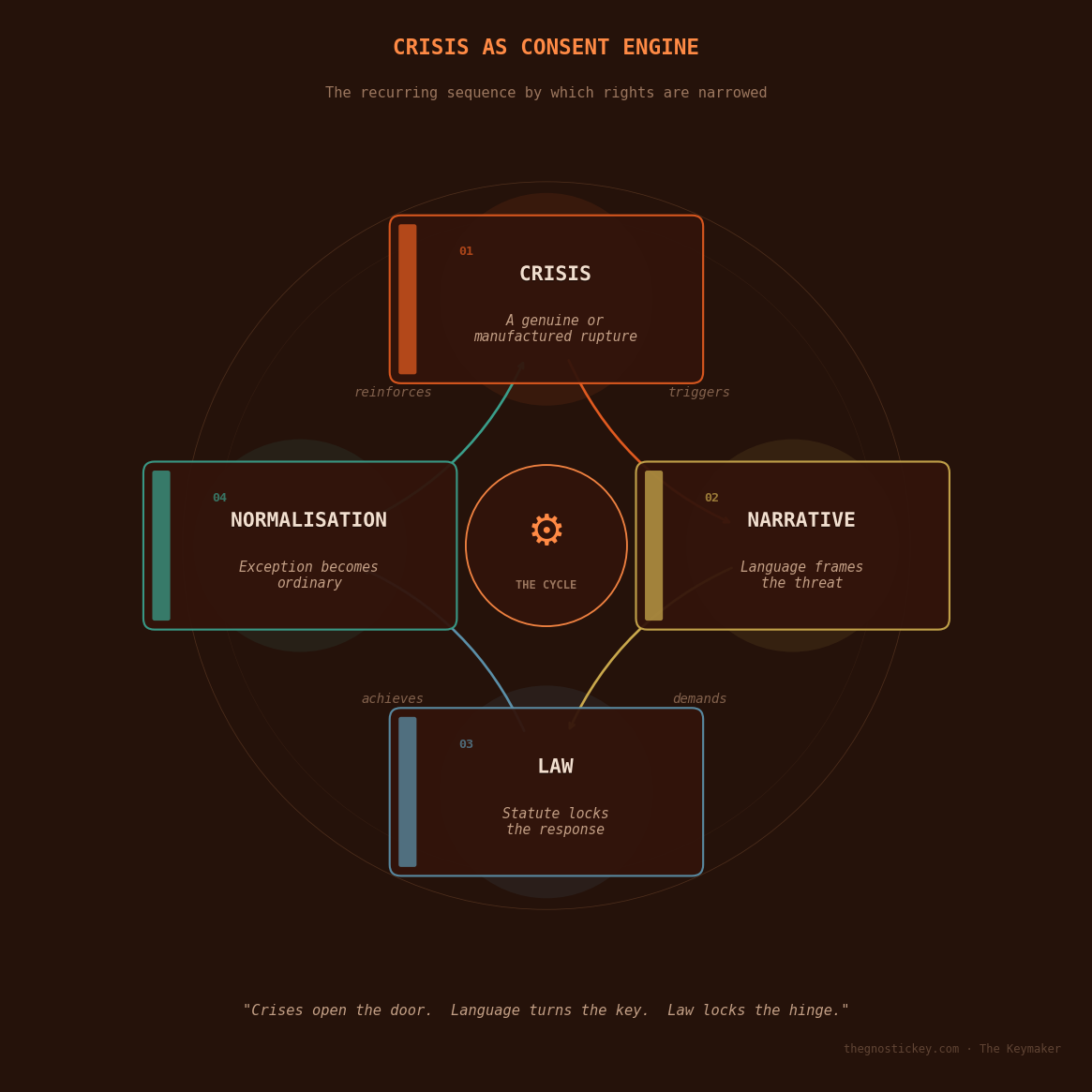
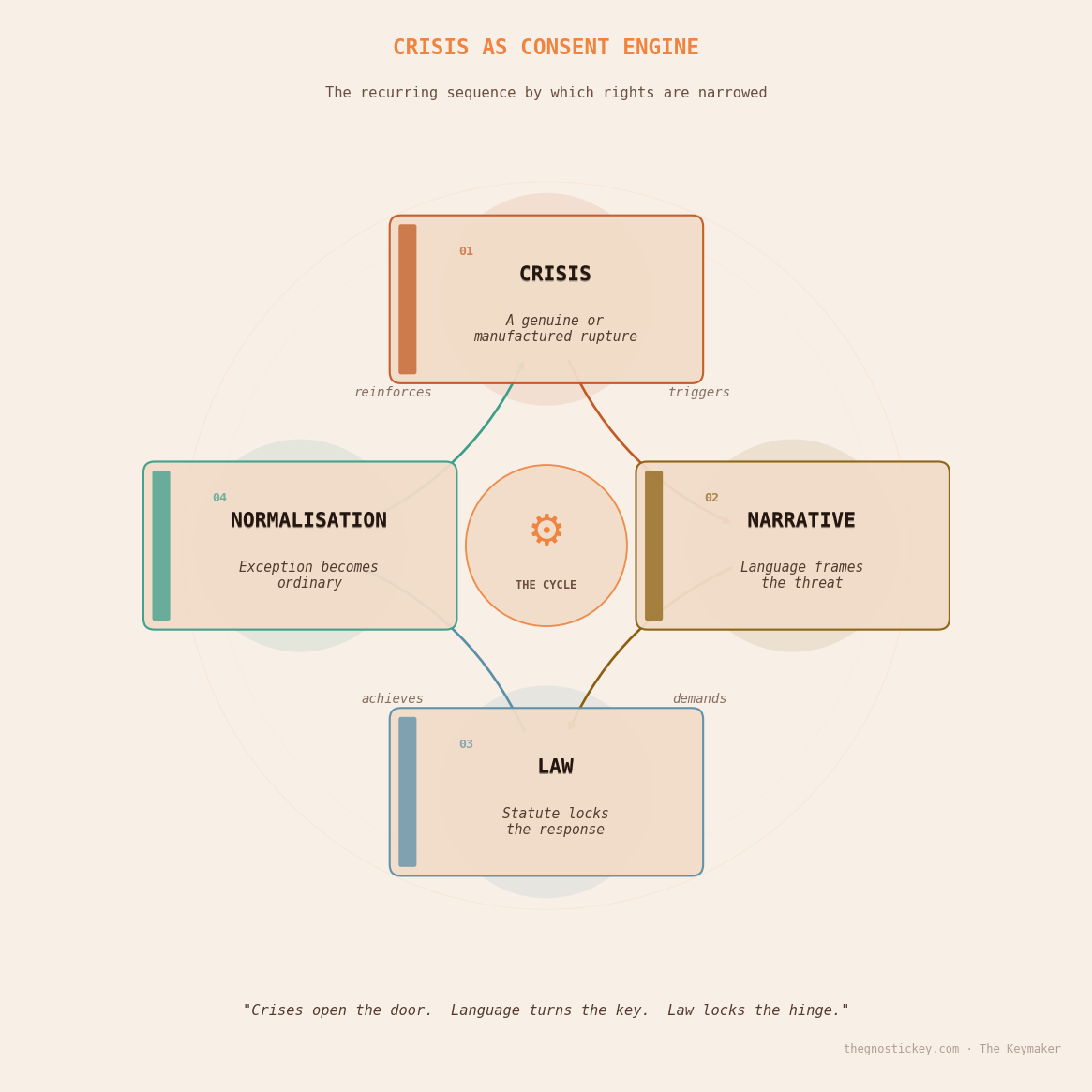
There is a recurring sequence: crisis, narrative, legislative response, enforcement normalisation.
- Security: genuine threats create pressure for pre-emptive tools.
- Disruption: protest is framed as an immediate harm to be minimised.
- Protection: speech governance shifts towards risk prevention.
- Emergency: temporary measures shape long-term expectations.
Crises open the door. Language turns the key. Law locks the hinge.
🧭 Counterview: the case made by the state
To keep this episode credible, we name the strongest counter-argument rather than pretending it does not exist.
Governments defending these expansions usually argue that:
- Public order powers prevent violence, intimidation, and escalating disruption.
- Counter-terror powers respond to genuine threats, and prevention is a duty.
- Surveillance frameworks are regulated alternatives to informal or unlawful monitoring.
- Online governance protects against illegal content, exploitation, and targeted harassment.
- Proscription is said to be used only when statutory tests are met, with oversight routes and Parliamentary procedure [24][25][26]
This episode does not deny that threats exist. It questions how easily the line moves, how broad categories become, and how often exceptional tools drift into ordinary politics.
🜏 The critique: mission creep and pre-emptive control
The SYSTEMIC critique is not that the state has no legitimate aims. It is that instruments chosen are increasingly:
- Vague: broad tests invite discretionary enforcement and uneven application.
- Pre-emptive: policing shifts from harm-response to harm-prevention, widening the net.
- Normalised: emergency tools become ordinary tools without a clean rollback.
- Chilling: uncertainty about the boundary discourages lawful protest and lawful speech.
In the language of this series: the cage is built slowly, then treated as the normal shape of the world.
🛡️ When Juries Disobey the Crown
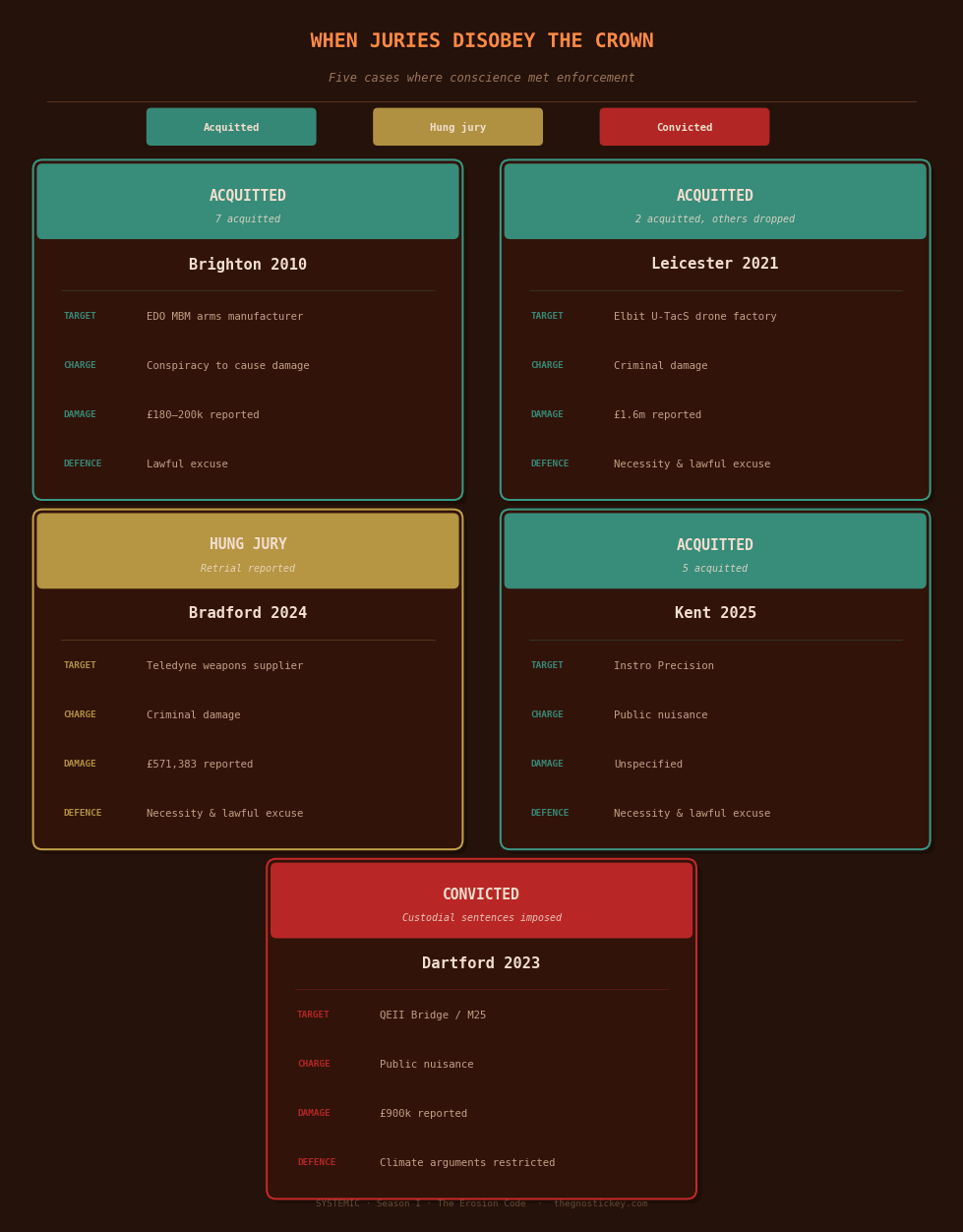
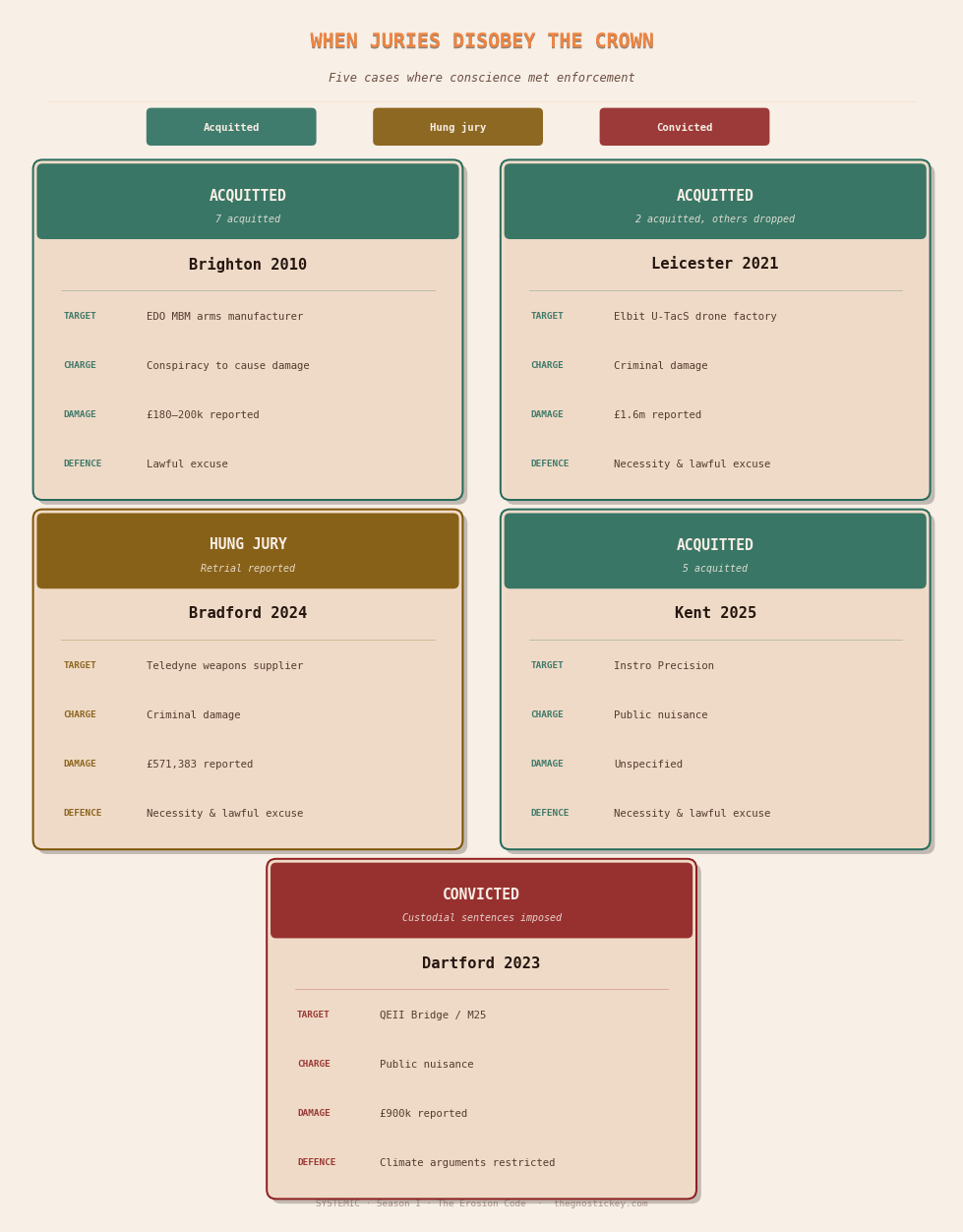
In rare moments, the courtroom breaks. When juries follow conscience over law, they restore something older than policy. These cases also show mixed outcomes: acquittals, hung juries, and convictions, even where similar arguments are raised.
| Case | Date | Target | Damage or cost | Charges | Outcome | Defence |
|---|---|---|---|---|---|---|
| Brighton 2010 | Jan 2009 | EDO MBM | Reported £180,000 to £200,000 | Conspiracy to cause damage | 7 acquitted [33] | Lawful excuse |
| Leicester 2021 | May 2021 | Elbit U-TacS | Reported £1.6m | Criminal damage | 2 acquitted, others dropped [34] | Necessity and lawful excuse arguments |
| Bradford 2024 | Apr 2024 | Teledyne | Reported £571,383 | Criminal damage | Hung jury, retrial reported [35] | Necessity and lawful excuse arguments |
| Kent 2025 | Late 2024 | Instro Precision | Unspecified | Public nuisance | 5 acquitted [36] | Necessity and lawful excuse arguments |
| Dartford 2023 | Oct 2022 | QEII Bridge | Reported £900,000 | Public nuisance | Custodial sentences reported [31][32] | Climate arguments restricted in court reporting |
Read plainly, these cases show the pressure point: the state argues deterrence and order; defendants argue necessity and conscience; outcomes vary by facts, forum, and admissibility rules.
🧿 Symbolic Mapping: The Courtroom Ritual
The courtroom is not only a legal venue. It is also a theatre of legitimacy, language, and obedience.
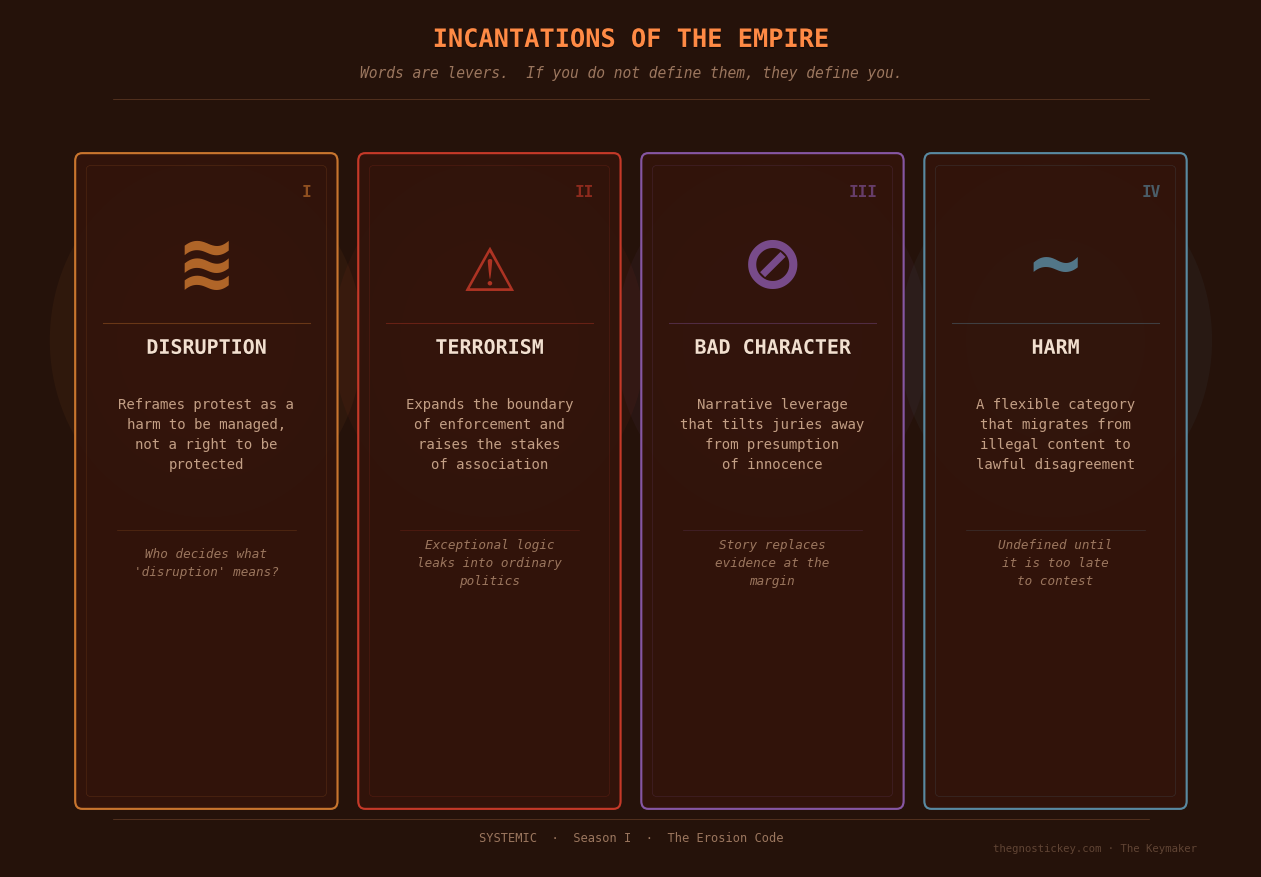
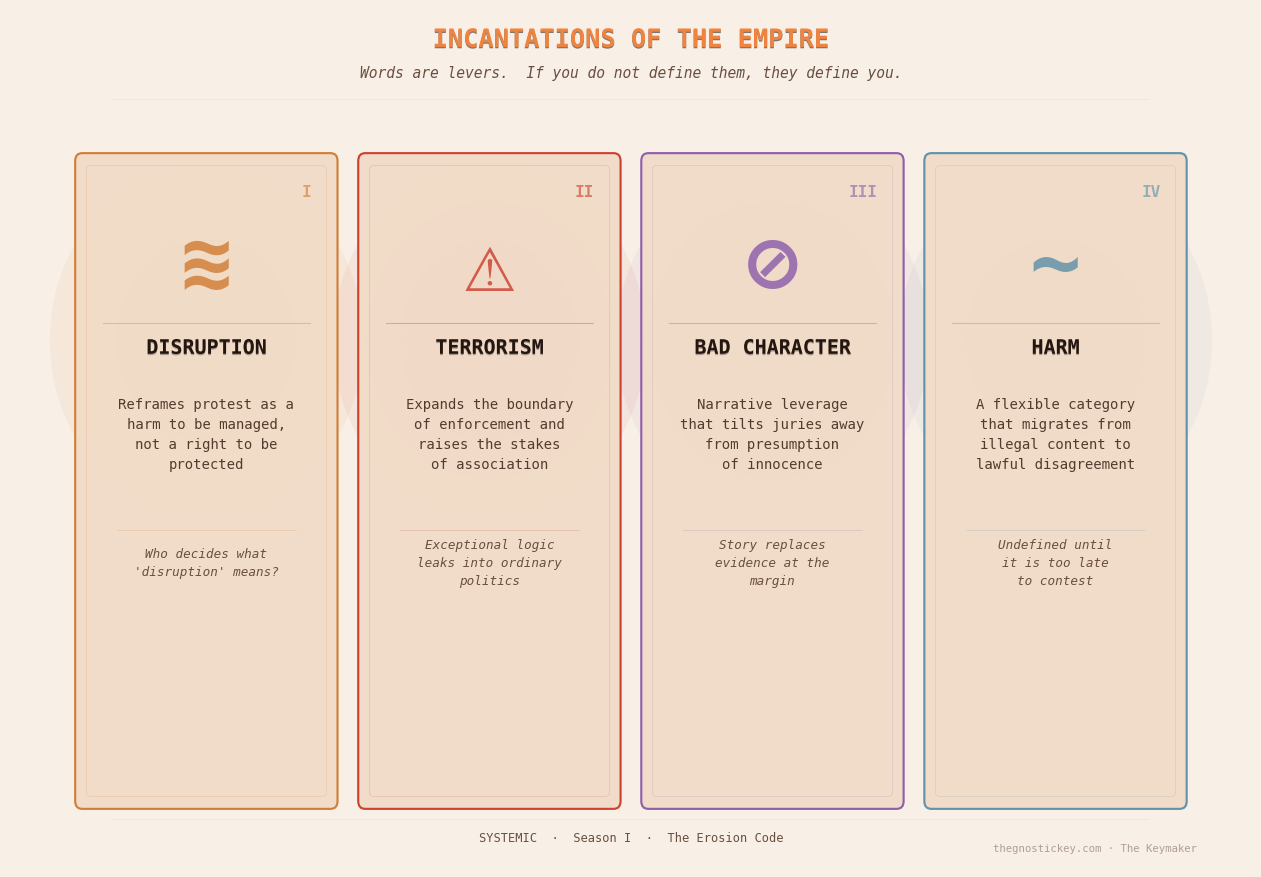
- Sigils: “Serious disruption.” “Terrorism.” “Bad character.”
- Chamber: A bounded square, observed, recorded, time-limited.
- Priesthood: Robes, procedures, the liturgy of precedent.
- Sacrifice: Context and motive reduced to admissibility rules.
When motive is excluded, the story narrows. When context is excluded, conscience becomes easier to criminalise.
Words are levers. If you do not define them, they define you.🪄 Sigil Summary: Incantations of the Empire
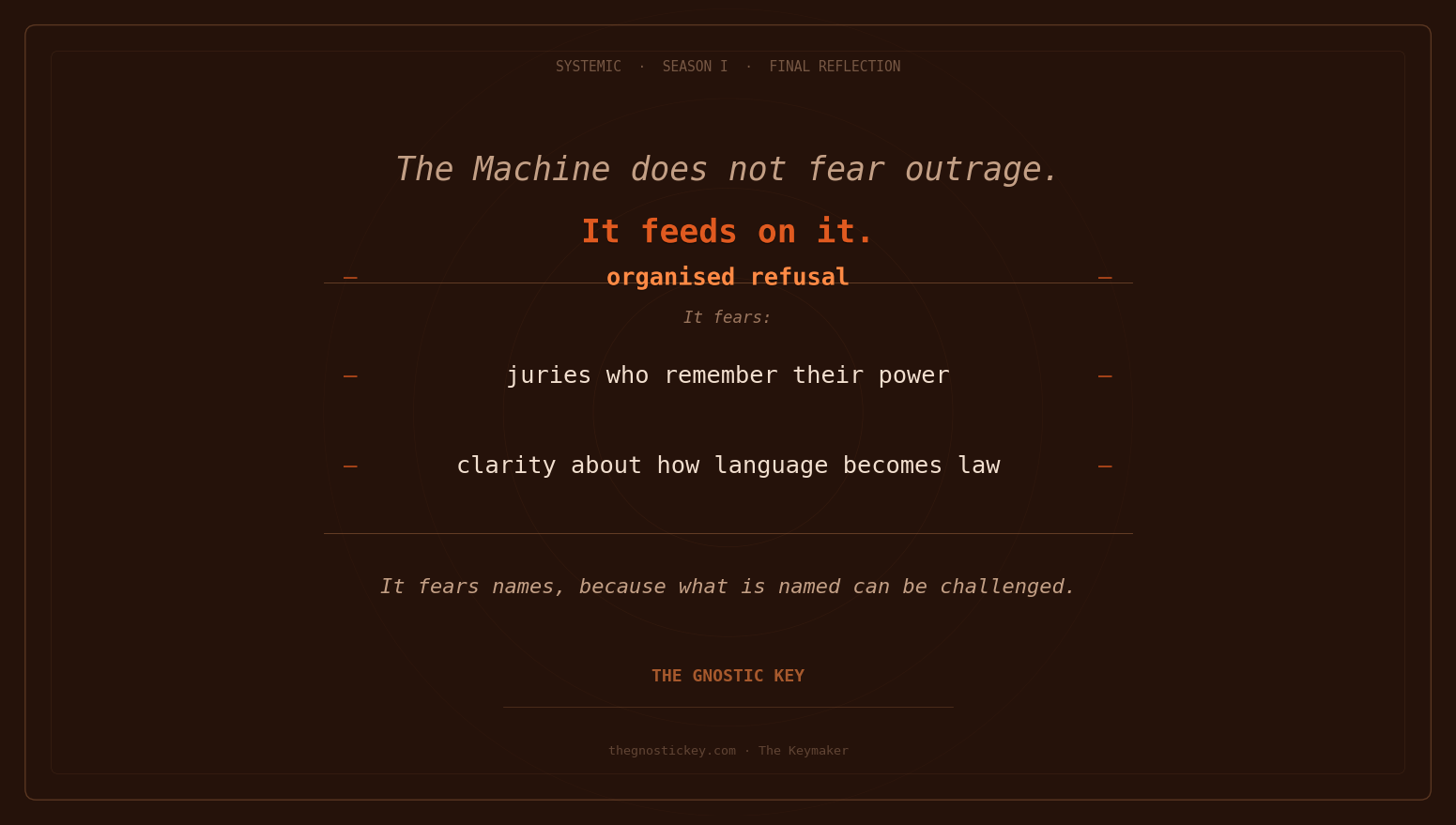
The Machine does not fear outrage. It feeds on it. It fears organised refusal. It fears juries who remember their power. It fears clarity about how language becomes law. It fears names, because what is named can be challenged.⚔️ Final Reflection: Naming the Machine
🗣️ When does a right become a crime?
After tracing the staircase of laws that narrowed speech, protest, and privacy, consider:
Which restriction did you accept at the time, and would you accept it again now?
- Which crisis was used as the justification?
- Which words did the state use to sell it: safety, disruption, harm, extremism?
- What would meaningful consent look like in a country without a codified constitution?
Share your insights with #TheGnosticKey.
📖 Glossary
Terms and symbolic language used in the SYSTEMIC series.
- Public Order Act
- The Public Order Act 1986: a central UK framework for public order offences and for imposing conditions on assemblies and processions.
- Palestine Action
- A direct action network targeting UK-linked arms supply chains connected to Israel. It was proscribed under the Terrorism Act 2000 in July 2025; in February 2026 the High Court ruled the ban unlawful, with the order held pending appeal.
- LASPO
- The Legal Aid, Sentencing and Punishment of Offenders Act 2012, a major UK statute that cut access to legal aid and reshaped who can realistically defend themselves in court.
- SDPO
- A Serious Disruption Prevention Order: a civil order that can restrict movement, association, and protest-related activity in anticipation of future disruption.
- Proscription
- The formal designation of an organisation as banned under counter-terror law, making membership, support, or associated activity a criminal matter.
- Online Safety Act
- The UK regulatory framework that gives Ofcom power to impose safety duties, fees, information demands, and enforcement measures on digital platforms and services.
Resources
📑 References
-
[1] Police and Criminal Evidence Act 1984 (legislation.gov.uk)
:Foundational police powers and safeguards: stop and search, arrest, detention, questioning, and codes of practice.
-
[2] Public Order Act 1986 (legislation.gov.uk)
:Public order offences and powers to impose conditions on assemblies and processions.
-
[3] Criminal Justice and Public Order Act 1994 (legislation.gov.uk)
:Major expansion of protest and trespass offences, restrictions on gatherings, and provisions related to raves.
-
[4] Terrorism Act 2000 (legislation.gov.uk)
:Core counter-terror framework with broad definitions and long-tail powers, including port and border examination powers.
-
[5] Anti-terrorism, Crime and Security Act 2001 (legislation.gov.uk)
:Post-9/11 expansion of security and state powers across multiple domains.
-
[6] Civil Contingencies Act 2004 (legislation.gov.uk)
:Emergency powers framework, including the making of emergency regulations under defined conditions.
-
[7] National Security Act 2023 (legislation.gov.uk)
:Espionage and state threats framework reform, including new offences and powers framed around hostile activity and foreign interference.
-
[8] Regulation of Investigatory Powers Act 2000 (legislation.gov.uk)
:Statutory framework for interception, communications data, surveillance, and covert tactics.
-
[9] Identity Cards Act 2006 (legislation.gov.uk)
:Created the National Identity Register and an identity card scheme, later repealed.
-
[10] Identity Documents Act 2010 (legislation.gov.uk)
:Repealed the Identity Cards Act 2006 and provided for the destruction of the National Identity Register.
-
[11] Data Retention and Investigatory Powers Act 2014 (legislation.gov.uk)
:Stopgap data retention legislation pending longer-term replacement.
-
[12] Investigatory Powers Act 2016 (legislation.gov.uk)
:Consolidates interception and investigatory powers, including bulk powers and oversight structures.
-
[13] Covert Human Intelligence Sources Act 2021 (legislation.gov.uk)
:Creates a statutory basis for criminal conduct authorisations for covert sources, with specified purposes and oversight.
-
[14] Data (Use and Access) Act 2025 (legislation.gov.uk)
:Reforms UK data governance and enables digital verification services and Smart Data schemes.
-
[15] Data (Use and Access) Act 2025 collection (GOV.UK)
:Government collection page with supporting documents and summaries.
-
[16] Criminal Justice Act 2003 (legislation.gov.uk)
:Wide-ranging reform of criminal justice, evidence, procedure, and sentencing.
-
[17] Criminal Justice and Immigration Act 2008 (legislation.gov.uk)
:Further reforms across criminal justice and enforcement powers.
-
[18] Legal Aid, Sentencing and Punishment of Offenders Act 2012 (Law Society explainer)
:Overview of LASPO changes and impacts on access to legal aid.
-
[19] Crime and Courts Act 2013 (legislation.gov.uk)
:Created the National Crime Agency and restructured parts of enforcement and courts.
-
[20] Coronavirus Act 2020 (legislation.gov.uk)
:Pandemic emergency framework affecting movement, assembly, enforcement, and compliance norms.
-
[21] Police, Crime, Sentencing and Courts Act 2022 (legislation.gov.uk)
:Expanded protest conditions and disruption-based restrictions.
-
[22] Public Order Act 2023 (legislation.gov.uk)
:Created new protest offences and orders, including Serious Disruption Prevention Orders.
-
[23] Online Safety Act 2023 (legislation.gov.uk)
:Established Ofcom duties and safety risk obligations for online services.
-
[24] Three groups to be proscribed (GOV.UK, 1 July 2025)
:Home Office announcement and framing for 2025 proscription decisions.
-
[25] Terrorism Act 2000 (Proscribed Organisations) (Amendment) Order 2025 (SI 2025/803)
:Statutory Instrument amending Schedule 2 to add proscribed organisations, including Palestine Action.
-
[26] Explanatory Memorandum for SI 2025/803 (legislation.gov.uk PDF)
:Government explanation of the SI and the stated reasons and claimed impacts.
-
[27] ProtectUK notice: Palestine Action proscribed (7 July 2025)
:Public notice stating the proscription came into force at 0001 on 5 July 2025.
-
[28] Court of Appeal press summary on judicial review route (Judiciary.uk PDF, 17 Oct 2025)
:Press summary addressing the procedural route and scrutiny for the challenge.
-
[29] UN Human Rights Chief statement on proscription concerns (OHCHR, 25 July 2025)
:International human rights critique of applying counter-terror powers to protest activity.
-
[30] Poole council surveillance tribunal case (BBC)
:Illustrative example of local authority surveillance and proportionality debates (often discussed alongside RIPA).
-
[31] Climate protesters jailed today. Who’s next?
:Guardian letters responding to the record jail sentences for Just Stop Oil activists over the planned M25 action, highlighting proportionality, deterrence logic, and the justice system’s treatment of climate protest.
-
[32] Dartford Crossing protest sentencing (The Guardian)
:Case study on protest sentencing and public nuisance framing.
-
[33] Brighton activists acquitted (BBC)
:Jury acquittal example for the 'jury conscience' thread.
-
[34] Elbit occupation verdict report (Leicester Mercury)
:Acquittal reporting linked to direct action against arms-linked sites.
-
[35] Teledyne protest trial (BBC)
:Arms-related protest case reporting to support the 'lawfare and conscience' section.
-
[36] Instro Precision blockade acquittals report (The Canary)
:Additional acquittal reporting. Use cautiously and cross-check key facts against a second source where possible.
-
[37] High Court rules Palestine Action ban unlawful (The Guardian, 13 Feb 2026)
:Reporting on the High Court ruling that the proscription was unlawful, with the order held pending appeal submissions.
-
[38] Government consultation on child online safety measures (GOV.UK, 2 March 2026)
:Government consultation covering child social media bans, curfews, gaming restrictions, AI chatbot controls, and faster legislative powers.
-
[39] Ofcom provisional finding on online suicide forum breach (27 Feb 2026)
:Ofcom provisional decision alleging breaches of Online Safety Act duties on risk assessment and illegal-content exposure.
-
[40] Ofcom Online Safety Act section 128 annual report 2025 (26 Feb 2026)
:Annual report detailing Ofcom's technology-notice powers and next enforcement steps under the Online Safety Act.
-
[41] Ofcom fast-tracks decision on blocking illegal intimate images (18 Feb 2026)
:Ofcom announcement on fast-tracking proactive hash-matching measures for illegal intimate images and explicit deepfakes.
These sources are provided for verification, study and context. They represent diverse perspectives and are offered as reference points, not as doctrinal positions.
Continue the Conversation
All discussions are publicly readable. Posting requires an Initiate-tier account. New thread creation is currently available at Initiate while Adept upgrades are not yet live.
Support The Gnostic Key
If this work helps you, a small contribution keeps the archive alive.