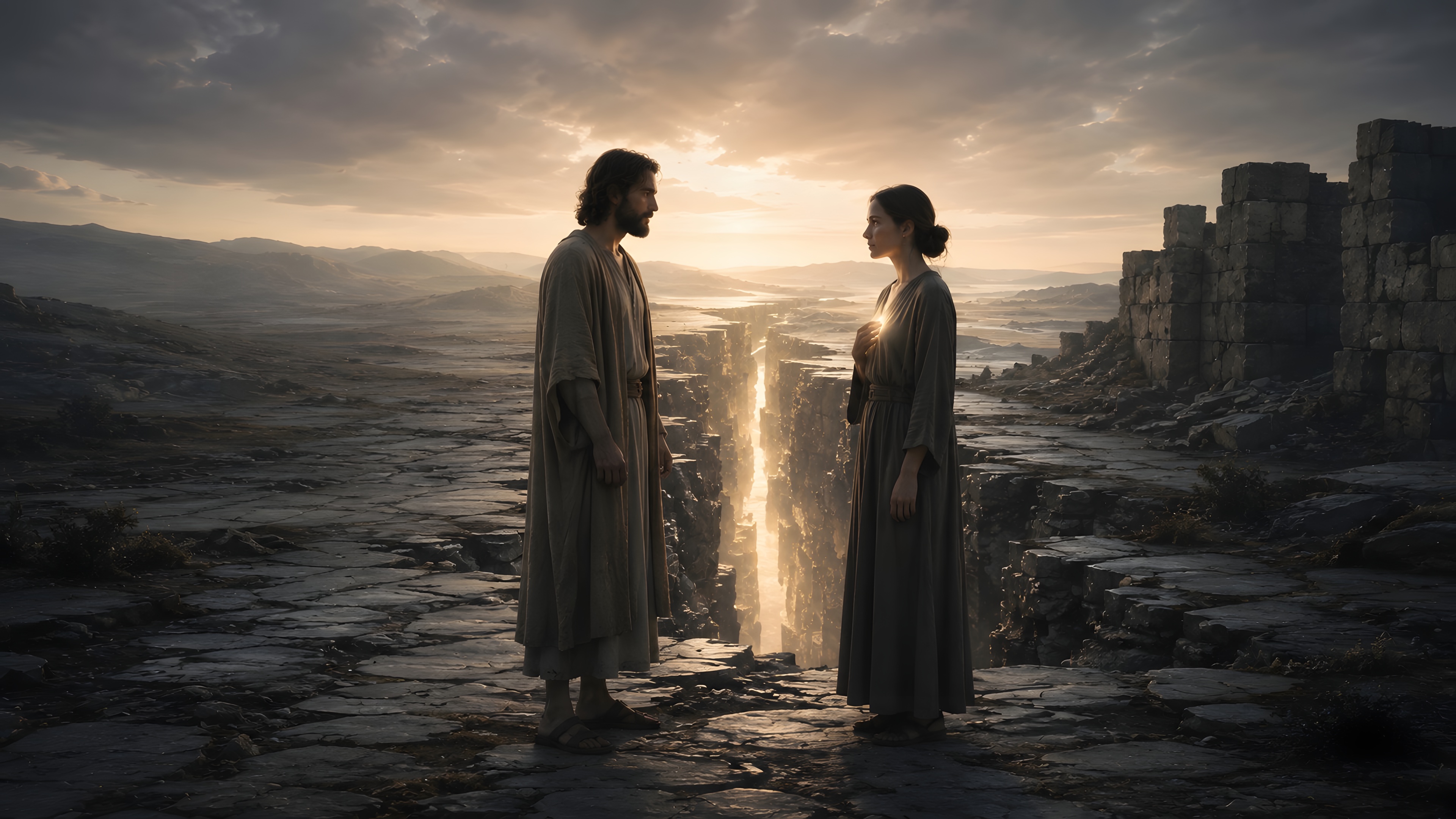
Previously in Part I
In Part I, you entered the hidden cosmology of Gnostic Christianity. Sophia fell from the Pleroma, Yaldabaoth mistook himself for God, and the Archons shaped a false world of obedience, hierarchy, and forgetting. Eden was not paradise, but the first theatre of control; the serpent was not a deceiver, but a messenger of awakening. Yet Sophia did not abandon creation. She hid a divine spark within humanity, a memory of the real waiting to be reignited. Now Part II turns to the hidden Christ, not primarily as a sacrifice to be worshipped, but as the Revealer who calls that spark back into remembrance.
Chapter 1: Jesus the Gnostic
Forget the Sunday school story.
In several Gnostic Christian texts, Christ does not come primarily to appease a wrathful god. He comes to expose ignorance, reveal the hidden Source, and awaken those trapped within the false cosmos.
Here, Christ is presented less as a sacrifice than as a Revealer: a bearer of hidden truth, sent to awaken those trapped in illusion.
He did not demand worship. He invited remembrance.
“Jesus said: He who drinks from my mouth will become like me, and I will become like him, and the hidden things will be revealed to him.”
Gospel of Thomas (Saying 108, NHC II,2 51:10–15). [6]
This was no metaphor. He wasn’t calling followers. He was calling peers: beings of light lost in flesh, who had forgotten who they were.
The Gnostic Jesus walked through the illusion like one who had seen behind the curtain. In texts such as the Second Treatise of the Great Seth, he mocks the rulers’ claim to power. In the canonical traditions, he challenges Sabbath authority and heals without institutional permission. Across both streams, he teaches in sayings, symbols, and private instruction to those prepared to hear.
He didn’t die for your sins. He came to remind you that you were never fallen, only asleep.
TL;DR
- Several Gnostic texts emphasise Jesus as a revealer of hidden truth rather than defining his mission chiefly through sacrificial atonement.
- He came from the Pleroma to awaken the divine spark within humanity.
- He challenges counterfeit authority and uses sayings, symbols, and private teaching to awaken recognition.
- His teachings were about remembering who you truly are, not repenting for what you are not.
- Gnosis, not faith, was the path he offered.
Chapter 2: The Secret Teachings & The Mirror
The Gnostic gospels tell a different story.
They say Jesus spoke in parables to the crowd, but whispered truth to those who could hear.
There was a hidden teaching. A transmission for the few, not the saved, but the ready.
To Thomas. To Mary Magdalene. To James and John. He passed on keys. Codes. A map of the soul’s origin and return.
“If your leaders say to you, ‘Look, the Kingdom is in the sky,’ then the birds will get there before you. If they say it is in the sea, then the fish will get there before you. Rather, the Kingdom is inside of you, and it is outside of you.”
Gospel of Thomas (Saying 3, NHC II,2 32:10–33:5). [6]
This wasn’t dogma. It was initiation.
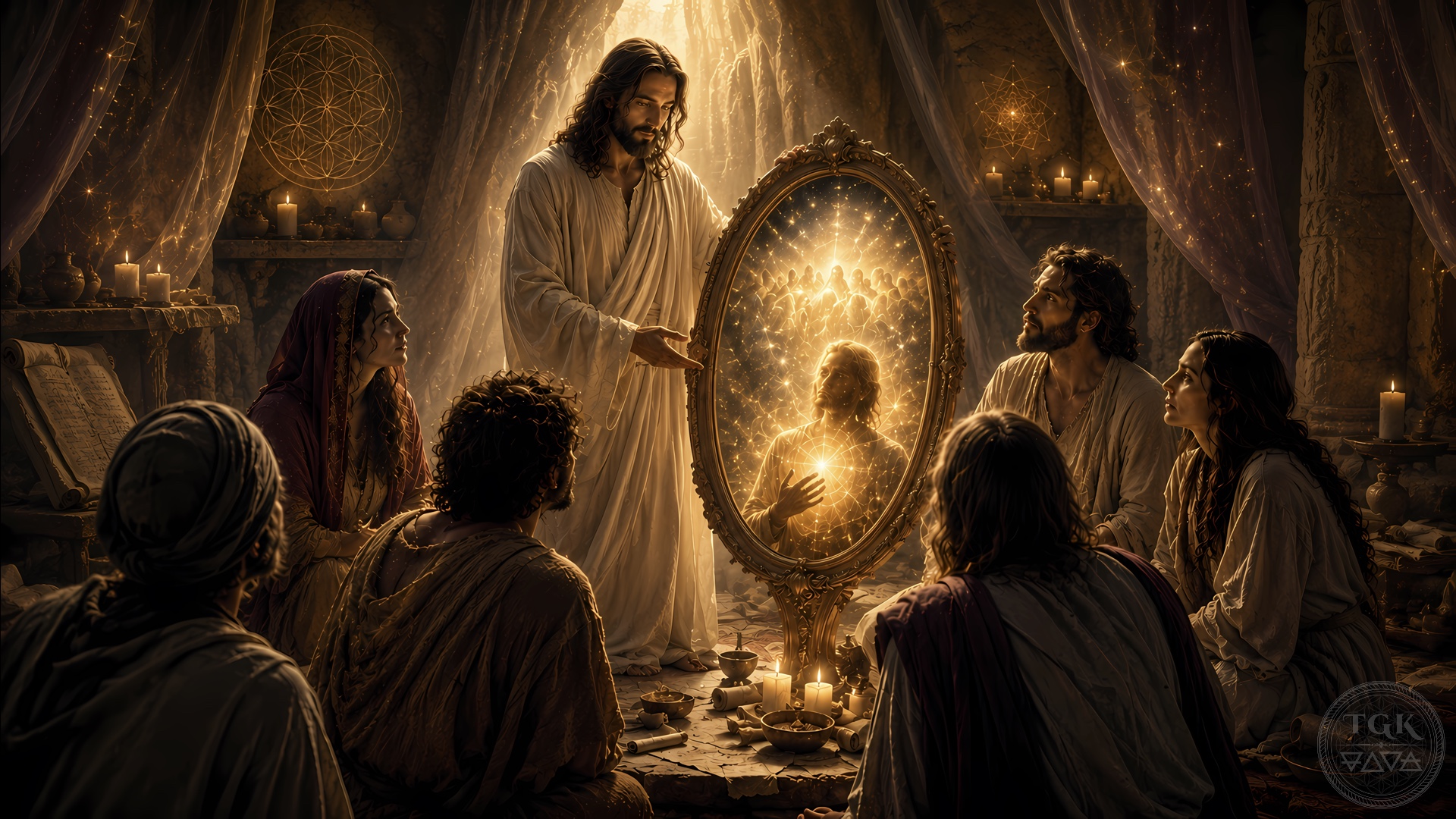
He didn’t come to found a religion. He came to hand you a mirror.
The Christ of the inner gospel, the Logos, says: “You are from the light. You’ve forgotten. I came to help you remember.”
In the Gospel of Philip, he speaks of a sacred chamber, a mystical union, not a wedding. In the Gospel of Mary, he affirms her insight above the apostles. In the Second Treatise of the Great Seth, the speaking Christ laughs at the rulers and denies that they truly possessed or understood him. The text presents a radically non-literal interpretation of the crucifixion.
Within that text’s vision, the true Christ remains beyond the rulers’ reach: already risen, already returning to the Pleroma.
Paraphrase: They thought they had killed me, but I was not theirs to kill.
The Second Treatise of the Great Seth (paraphrase). [4]
This is the Christ they buried, the one who came to show you what you are.
Not a worshipper. A mirror. A spark. A sovereign soul who forgot.
TL;DR
- Jesus gave public teachings, and secret ones to those ready to receive gnosis.
- He passed mystical knowledge to Mary Magdalene, Thomas, and others outside Church canon.
- The Second Treatise of the Great Seth portrays the true Christ as beyond the rulers’ power and treats the crucifixion through a non-literal, revelatory lens.
- His goal was not salvation by blood, but remembrance by light.
- You are not separate from Christ. You are what he came to reflect.
Chapter 3: Gnosis vs Religion
The Gnostic Christ didn’t come to build a Church.
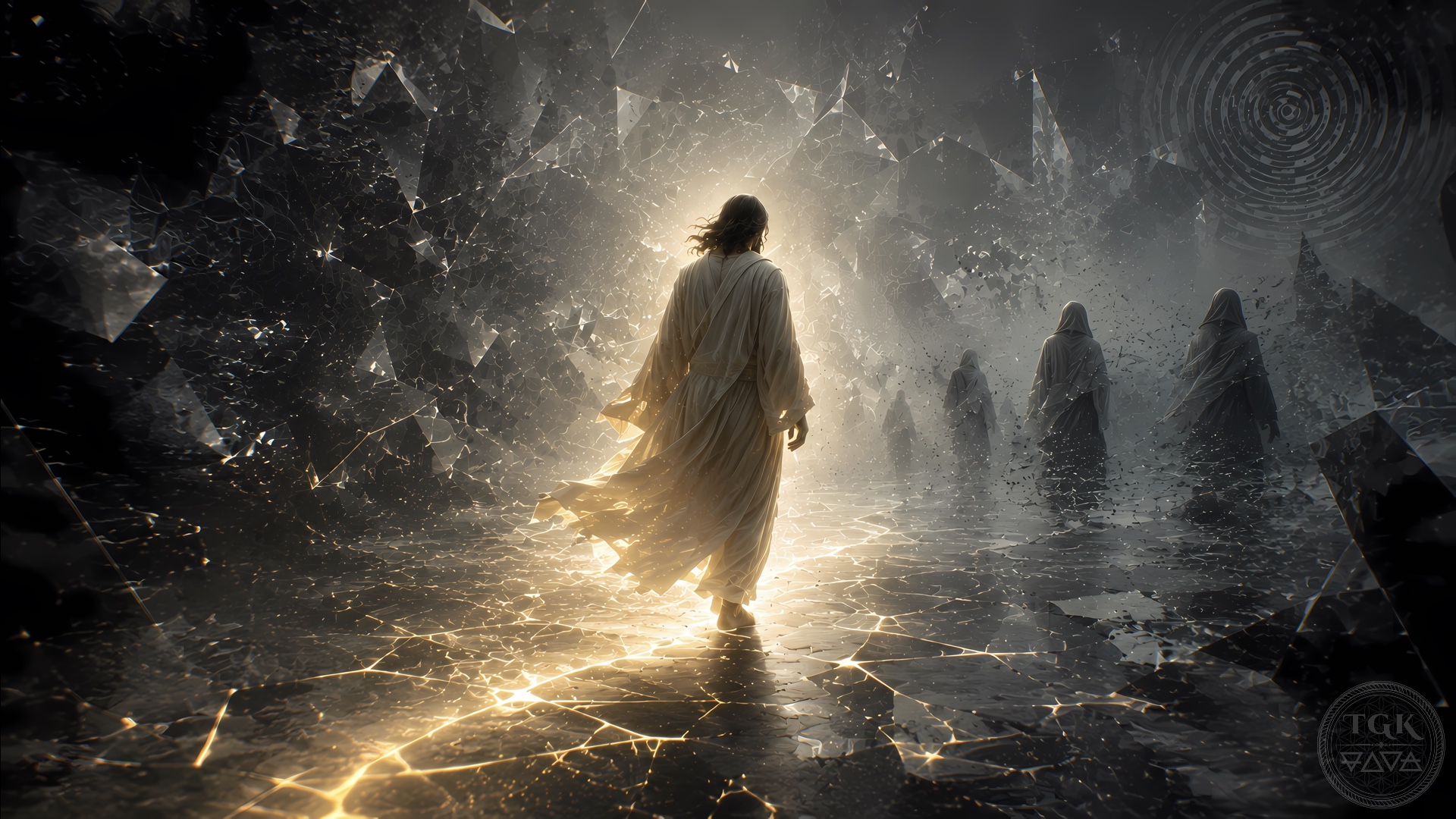
He came to burn the veil.
He said, “The kingdom is within you.” The priests said, “Pay your tithe and obey.”
He said, “You are children of the living Father.” The bishops said, “You are fallen and unworthy.”
He revealed a God beyond jealousy, violence, and judgement, they rebranded the Demiurge and called him holy.
And so the war began, not between good and evil, but between gnosis and control.
To the Gnostics, religion became the new Archon, a system built not to save, but to suppress.
The Christ they preached? Dead. Obedient. Chained to a cross.
“Woe to the Pharisees, for they are like a dog lying in the manger of the cattle; for he neither eats nor does he let the cattle eat.”
Gospel of Thomas (Saying 102, NHC II,2 51:1–5). [6]
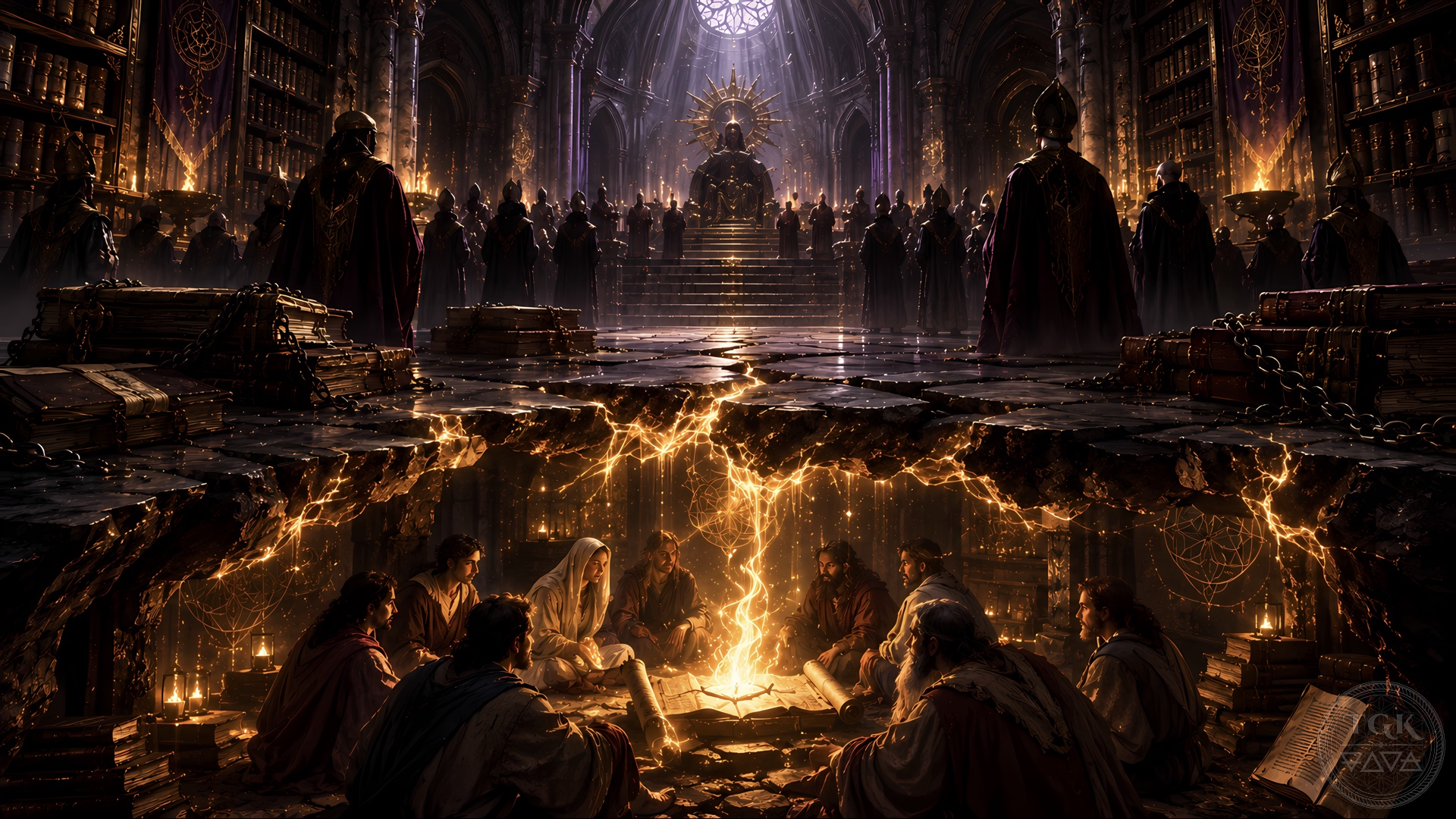
As Christian orthodoxy developed, four gospels became canonical while many other writings were excluded from authorised scripture.
Texts associated with Thomas, Mary, Philip, and other alternative communities were condemned or neglected as heretical. Their communities were marginalised, their writings ceased to circulate widely, and some manuscripts were hidden or lost.
But gnosis does not need a pulpit. It needs silence. It needs suffering. It needs the soul ready to remember.
This is why the system fears it.
Because once you know, truly know, you no longer obey.
TL;DR
- Gnosis is inner knowing, not belief, obedience, or blind faith.
- The Gnostic Christ offered sovereignty, not submission.
- Developing Church institutions excluded and condemned these teachings while consolidating doctrine and authority.
- True spiritual knowledge threatens systems that rely on fear, guilt, and hierarchy.
- The real gospel wasn’t written in stone; it was whispered soul to soul.
Chapter 4: Awakening the Spark
You’ve read the texts. You’ve heard the whispers. But now comes the hardest part, remembering what’s already inside you.
Within the Gnostic cosmology, the divine spark is not merely a metaphor. It is a hidden inheritance in the soul, a smuggled signal from the Pleroma.
It’s the part of you that questions. That aches. That refuses to fit inside the cage of this world.
But awakening the spark isn’t safe.
It means letting the false self burn. It means seeing the Archons in your thoughts, your habits, your shame, and choosing to unmake them.
In modern psychological language, this may be approached through trauma work, shadow work, and the examination of inherited patterns. That is a contemporary application of the myth, not terminology used by the ancient texts themselves.
“Jesus said: He who seeks, let him not cease seeking until he finds; and when he finds he will be troubled, and when he is troubled he will be amazed, and he will reign over the All.”
Gospel of Thomas (Saying 2, NHC II,2 32:2–10). [6]
The Gnostic path isn’t for the pure. It’s for the raw: the broken open. The honest.
The spark wakes through pain, through presence, through prophecy. It doesn’t need a saviour; it is the saviour.
And when it ignites, nothing in this world can hold you.
TL;DR
- Within Gnostic cosmology, the divine spark is understood as a fragment or trace of the Pleroma within humanity.
- It awakens not through belief, but through remembrance, suffering, and inner fire.
- The Archons coded the illusion, not with machines, but with forces of fear, shame, and control. A cosmic pattern to keep the spark from waking.
- Awakening the spark means breaking old identities and reclaiming your true nature.
- You are not here to be saved, you are here to remember that you were never lost.

Chapter 5: Sophia’s Redemption Through Us
At the centre of the Gnostic myth is a wounded Aeon, not a diminished one.
Sophia, divine Wisdom, fell from the Pleroma: not in sin, but in longing. And in falling, she scattered her light through all of creation.
You are one of those fragments.
Your divine spark isn’t just about you; it’s a shard of her. Her memory. Her sorrow. Her promise.
In TGK’s symbolic reading, every awakening participates in her return.
Every act of gnosis gathers what was scattered. Every truth spoken cracks the lie that sustains separation.
“Take courage. It is I; be not afraid.”
Pistis Sophia, Book I, Chapter 5. [5]
Later comparative and esoteric readings have placed Sophia alongside figures such as the Shekhinah in Kabbalah, the anima in alchemy, and symbolic forms including Eve, Magdalene, the Serpent, and the Bride. These are interpretive correspondences, not claims that the traditions are identical.
But in you, she is becoming whole again.
This is why the Demiurge fears awakening, because your liberation is hers.
And when Sophia rises, the veil shatters.
You are not just the student of this gospel, you are the completion of it.
TL;DR
- Sophia, the fallen Aeon, scattered her divine light into creation, including into you.
- In this symbolic reading, the spark participates in Sophia’s scattered light, and awakening becomes an image of restoration.
- Gnosis may therefore be read not only as personal awakening, but as an image of cosmic repair and Sophia’s restoration.
- The system fears this, because the return of her light undoes the illusion.
- You are not a follower of the myth, you are the one completing it.

Creative Prompt
Compose a meditation titled “The Spark Within”. Describe the movement of divine light in your life without invoking fear or doctrine.
What Does Liberation Mean to a Soul That Remembers?
You’ve seen the false light and met the Revealer within. Now the question turns inward.
When Christ awakens inside you, what must die for the spark to live?
- Which belief still binds you?
- When does love become knowledge?
- Can you recognise the Revealer in others without worship?
Share using #TheGnosticKey and tag @thegnostickey.
Quiz
Can you follow the Revealer beyond doctrine and into remembrance?
Sources & Study Path
Texts and studies illuminating Christ as Revealer and the remembrance of the divine spark.
References
-
:Christ reveals ignorance as the true sin and remembrance as salvation.
-
:Mystical reflections on light, union, and the bridal chamber.
-
:Marya’s revelation of the soul’s ascent beyond law and fear.
-
[4] Second Treatise of the Great Seth
:Christ speaks beyond the crucifixion illusion.
-
:Sophia’s cosmic ascent through Christic light.
-
:Sayings of the Revealer, cited here for the mouth-drinking, kingdom-within and seeking sayings.
Scholarly Sources & Translations
- Elaine Pagels (1979). The Gnostic Gospels. Random House.
- Marvin Meyer (ed.) (2007). The Nag Hammadi Scriptures. HarperOne.
- Bentley Layton (1987). The Gnostic Scriptures. Doubleday.
- Hans Jonas (1958). The Gnostic Religion. Beacon Press.
- Kurt Rudolph (1983). Gnosis. Harper & Row.
These sources are provided for verification, study and context. They represent diverse perspectives and are offered as reference points, not as doctrinal positions.
Link unavailable? Paste the URL into web.archive.org to find an archived snapshot. Most sources in our evidence packs are preserved there.
Read Alongside
Open Discussion
Every argument in this piece is open to challenge. Bring primary sources, counterexamples or a better interpretation: the Community exists to test this work, not to validate it.
Own This Part
Keep a permanent offline copy of this part, with the full text and the complete formatted edition ready to download.
Members and Founding Members pay £2.49, applied automatically at checkout when signed in.
Episode Artwork
View the curated episode artwork collection, with personal-use digital downloads available through the TGK Shop.
Support The Gnostic Key
The Gnostic Key is independently researched, written, and built. If the work has value to you, you can make a one-off contribution to help keep TGK independent.