
Season I · Episode I
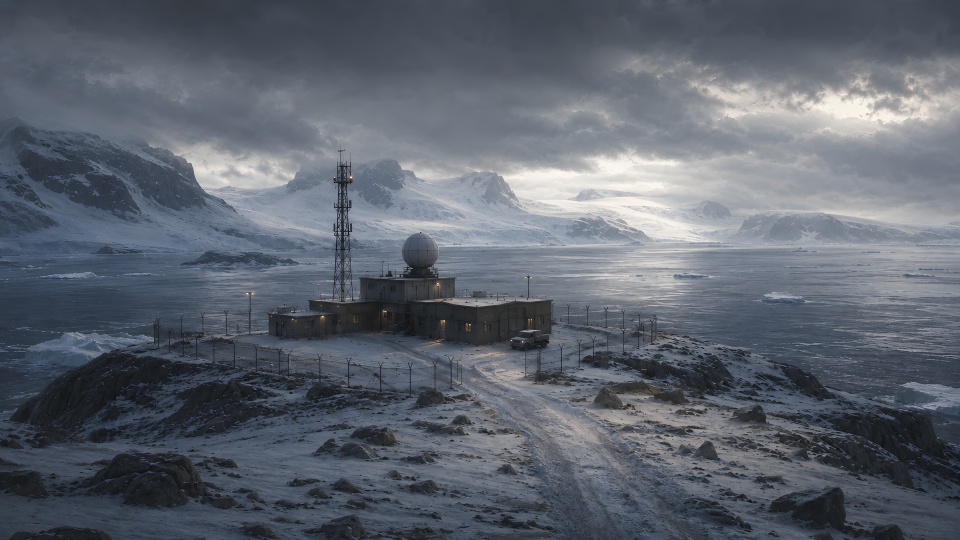
Episode I: The Panic Room at the Top of the World
The perimeter file: Greenland, bases, minerals, cables, and territorial panic as security policy.
Loading notifications...
Season I opens with three published investigations into territorial hardening, asset control, and the trade permission systems used when imperial confidence gives way to defensive acceleration.
Available now
Begin with Episode I for the strategic map, then Episode II for the legal and financial machinery, then Episode III for the system at scale: territorial panic, asset seizure and trade turned into enforcement infrastructure.
When confidence contracts, coercion is routed through territory, law, and trade.
Season I · Episode I
The perimeter file: Greenland, bases, minerals, cables, and territorial panic as security policy.

Season I · Episode II
The legal file: recognition, sanctions, asset freezes, and court-supervised transfer.
Season I · Episode III
The system file: tariffs, services gates, export controls, and compliance-chain enforcement.
Method and purpose
The Panic Room Years documents how declining leverage produces heightened control: territorial hardening, asset seizure and trade permission systems as instruments an empire reaches for when confidence gives way to defensive acceleration.
Lock I: Emergency Powers, Tools of Direct Coercion establishes how territory, law and trade are routed into coercion when confidence contracts. Further locks will extend the investigation as they are published.
The Empire Codes began on 2 March 2026 with Episode I. Publication then paused while The Gnostic Key’s wider platform, evidence system and editorial structure were rebuilt. The series resumes with a restored opening episode and the staggered publication of the investigation that follows.
The material is presented as investigative and civic analysis, not legal, financial or diplomatic advice. Its purpose is to make recurring structures visible so that claims, evidence and policy can be examined more clearly.
Begin with free investigations, then join for deeper access, community participation and the growing archive.
21 live reading pages across 4 pillars • 4 multi-season arcs in production.
Free access opens the investigation. Paid membership unlocks the deeper episodes, community discussion, and the full archive as it grows.