Introduction
Here’s something that should really bother you.
In January 2026, the President of the United States threatened eight European countries: Denmark, Norway, Sweden, France, Germany, the Netherlands, Finland and the United Kingdom. An additional 10% tariff on all goods, to remain in place “until such time as a Deal is reached for the Complete and Total purchase of Greenland”. Within seventy-two hours, Denmark and Greenland were suggesting an Arctic NATO mission, and the European Commission was signalling a support package. By the end of the week, Reuters was describing the effect on allies as “whiplash”. [1] [5] [2] [3] [4]
A mere seventy-two hours later, and the political response was already taking shape. Greenland was already being treated as a strategic asset, but the speed of what followed did not come from a standing start. Some of the machinery was already moving for reasons that predated Trump’s threat. [5]
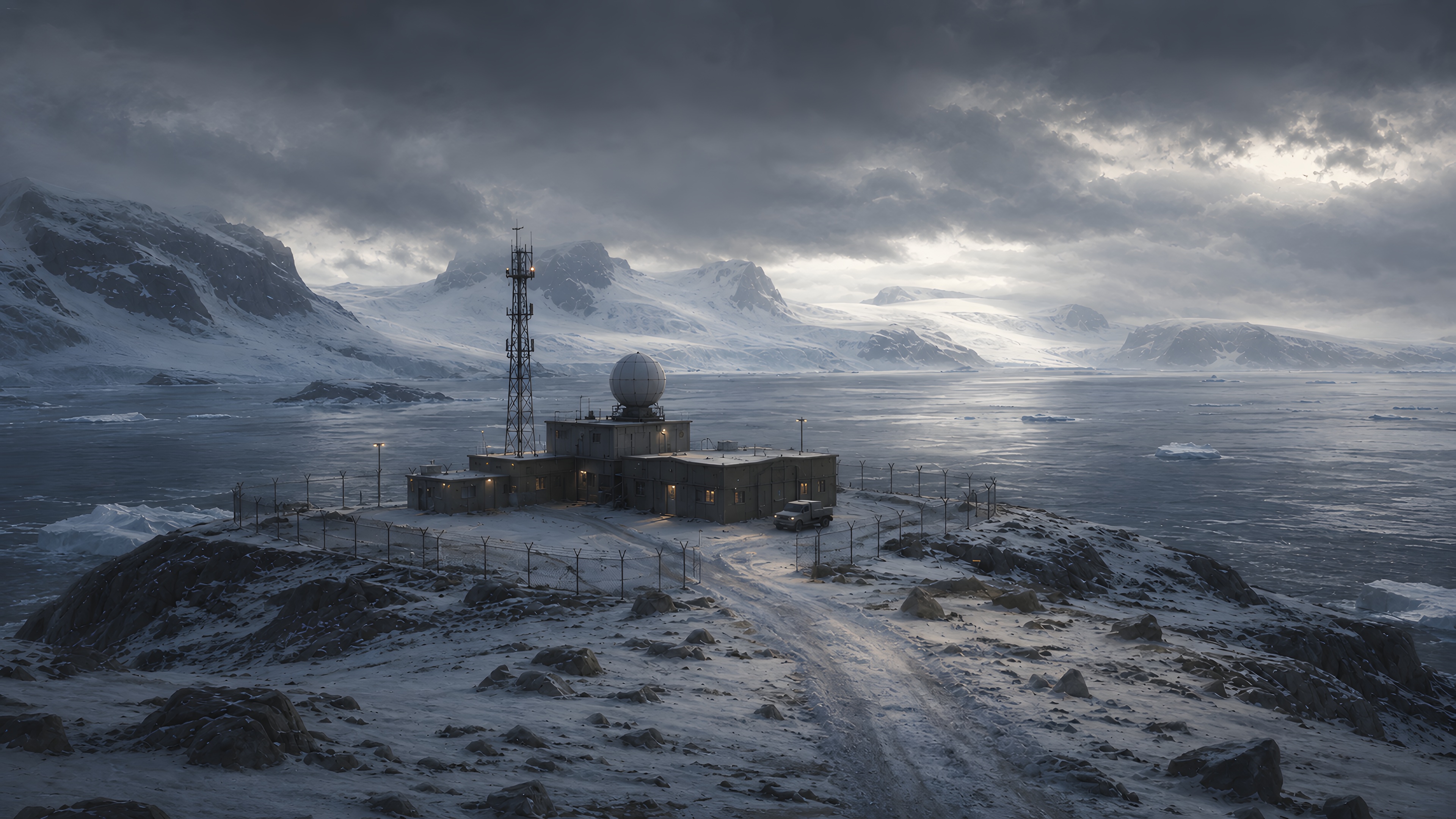
The official story was security, protection and Arctic defence. The real story, however, is that Greenland is the panic room at the top of the world. The thing about panic rooms is that you don’t build one if you already feel safe. You build one for protection. When the walls around you no longer make you feel safe, you build something inside them that will.
What the official story leaves out
From the seventeenth century onward, control of the sea became a major source of European imperial power. Maritime chokepoints. The ability to blockade, sanction and squeeze countries that depend on shipping for their economies has given Western powers enormous leverage. They have repeatedly used that leverage to coerce other states and force them to bend to their will. [6]
The world is changing, though. Through necessity, countries have begun to find ways to circumvent that dominance. The status quo is being challenged, and Western power is no longer going uncontested.
While Western governments have been fighting over the Middle East, sanctioning Russia and trying to contain China, rival states and commercial networks have been expanding alternative routes that can reduce their dependence on Western-controlled sea lanes. They have been building railways, creating land corridors, flight paths and trade routes that do not pass through the usual maritime gates, such as the Suez Canal. The Belt and Road Initiative. The International North-South Transport Corridor has been underway for some time. Some China to Europe rail services advertise transit times of between 11 and 16 days. [7] [8]
These services are not evidence that rail is replacing maritime shipping. Their significance here is narrower: they create another route through which some trade can move without passing through the same maritime chokepoints. Governments do not have to wait for an alternative to dominate the market before planning around the possibility that it could become more important.
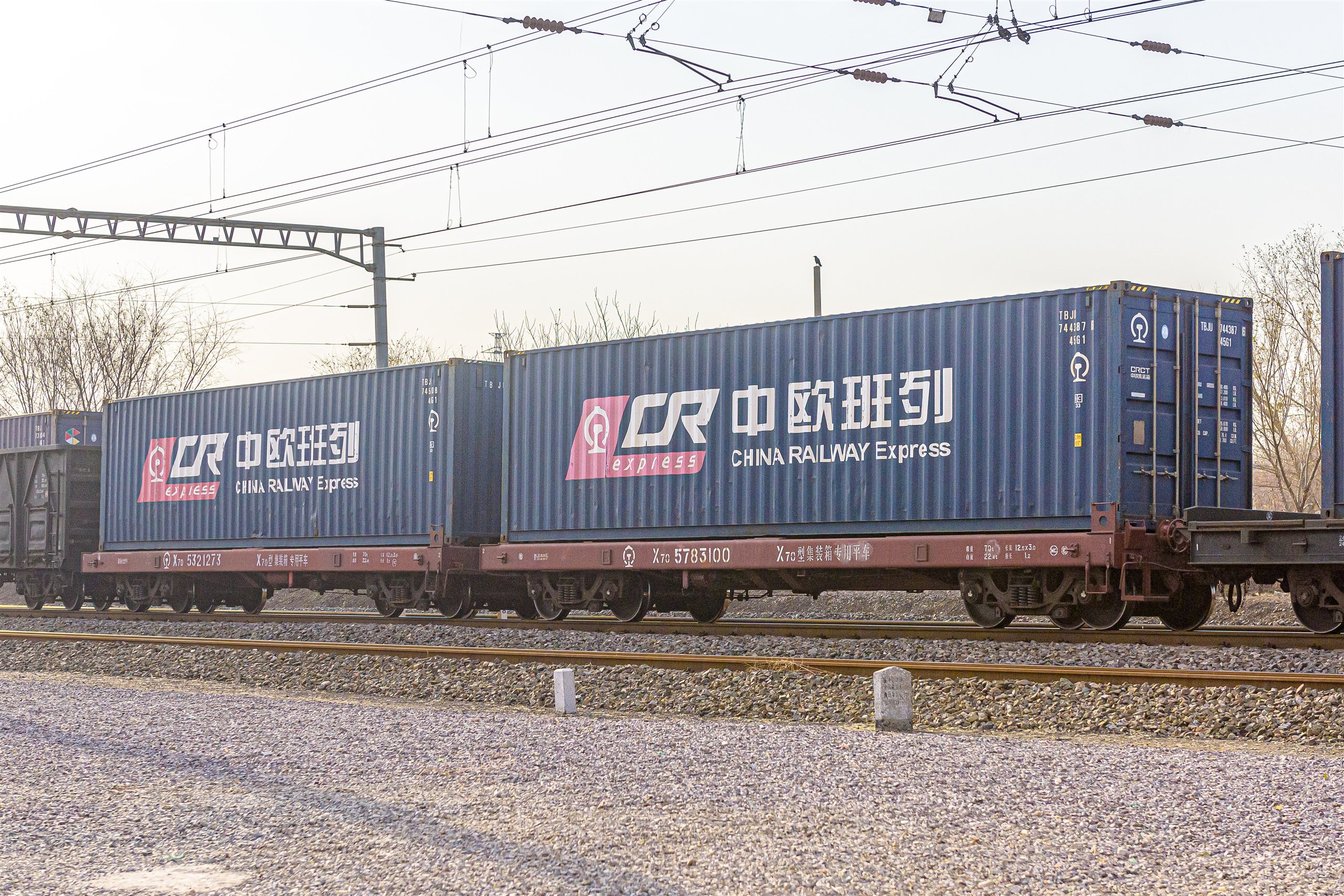
“Trains don’t care about naval blockades”
I think this is part of why we are seeing increased hostility around these routes and corridors. The West understands that alternatives do not have to replace maritime shipping to reduce dependence on the chokepoints it has traditionally controlled. Every route that can carry trade outside those gates creates another option. Governments plan against that trajectory long before it becomes dominant. The same logic helps explain why the perimeter is being fortified in places where Western power still holds an advantage, and why so much of it is being presented as “Arctic security”.
Greenland is not the prize. It is the panic room of a system that no longer trusts the limits of its own power.
A note on method
I am not claiming there is some secret master plan behind all of this. I don’t need to. The treaties, doctrine and procurement notices are all public and the infrastructure is being built in plain sight. Where I draw a conclusion from that record, I will tell you that it is my conclusion.
What I see is Western governments trying to hold on to leverage as countries find more ways around the maritime chokepoints they have traditionally controlled. The more trade can move without passing through those gates, the harder it becomes to decide who gets through, who gets squeezed and who gets stopped.
TL;DR
- Greenland’s strategic value begins with function. Pituffik sits inside the US missile-warning and space-surveillance system. Geography gives that system warning time, which gives decision-makers more time to respond.
- The pattern is perimeter hardening. Runway work, resilience upgrades and infrastructure investment are presented as maintenance or continuity. Each project may look routine on its own but together they make the strategic footprint more durable and harder to unwind.
- Permission widens through institutions. Danish agreements, NATO planning and EU support make greater spending and presence easier to authorise. Some of the legal and policy framework existed long before the January 2026 confrontation.
- Cables and minerals intensify the pressure. They did not create Greenland’s military importance, but they give governments, defence planners and commercial interests additional reasons to treat the island as a strategic dependency.
- Arctic routes matter before they become dependable. Commercial use remains difficult and uncertain, but governments are already spending on the possibility. Planning creates infrastructure, budgets and interests of its own.
- The costs are not distributed evenly. Greenlanders live with the sovereignty and development consequences. Denmark carries political and financial obligations. The wider security architecture receives much of the strategic benefit.
How panic becomes policy
The sequence matters. The rhetoric and the machinery do not always move in that order. Sometimes the institutions are already in motion before the confrontation becomes headline news.
On 15 January, two days before Trump’s tariff threat, the Danish Armed Forces announced that it was increasing its activity in and around Greenland, including aircraft, ships and soldiers. The announcement described this as a continuation of activity already underway and planned for 2026. [9]
Several European NATO allies had also sent small numbers of military personnel to Greenland for a reconnaissance mission ahead of the larger Operation Arctic Endurance exercise. The UK’s contribution was a single officer, and the Ministry of Defence said that this did not amount to a deployment. [1] [5]
After Trump’s tariff threat, the political response became more explicit. At Davos, European Commission President Ursula von der Leyen spoke of the “necessity to build a new form of European independence”. [10] She also announced a “package to support Arctic security”, while describing the sovereignty of Greenland and Denmark as “non-negotiable”. [3]
That is what really caught my attention. Not the threats themselves, we have come to expect that from Trump, but how much of the machinery was already in motion before them. The confrontation did not create that machinery. It exposed how much of it was already there.
“The threat makes the headline. The machinery makes it permanent.”
What I mean by panic room behaviour
When I talk about panic room behaviour, I am describing a pattern I can see across the documents, budgets, doctrine and procurement. There are four parts to it:
Perimeter hardening. Expand what needs protecting, then strengthen what sits around it. Runways are upgraded, infrastructure reinforced and existing facilities made harder to disrupt. Much of it appears publicly as maintenance, resilience or continuity.
Warning time. Radar, satellites and sensors are there to detect a threat as early as possible. In a missile-warning system, even seconds matter.
Decision time. Detecting a threat is only useful if the information can still move. Communications and command systems have to remain operational long enough for somebody to act on the warning.
Routine instruments. Treaties, doctrine, budgets and procurement. Nothing particularly dramatic about these things in isolation, but these are the ordinary tools through which a military presence can be maintained, strengthened and expanded.
What Greenland actually does
Greenland has a specific function. The Pituffik Space Base (formerly Thule) supports missile warning, missile defence and space surveillance. [11] [12] The base exists to detect threats early enough to give decision-makers time to respond.
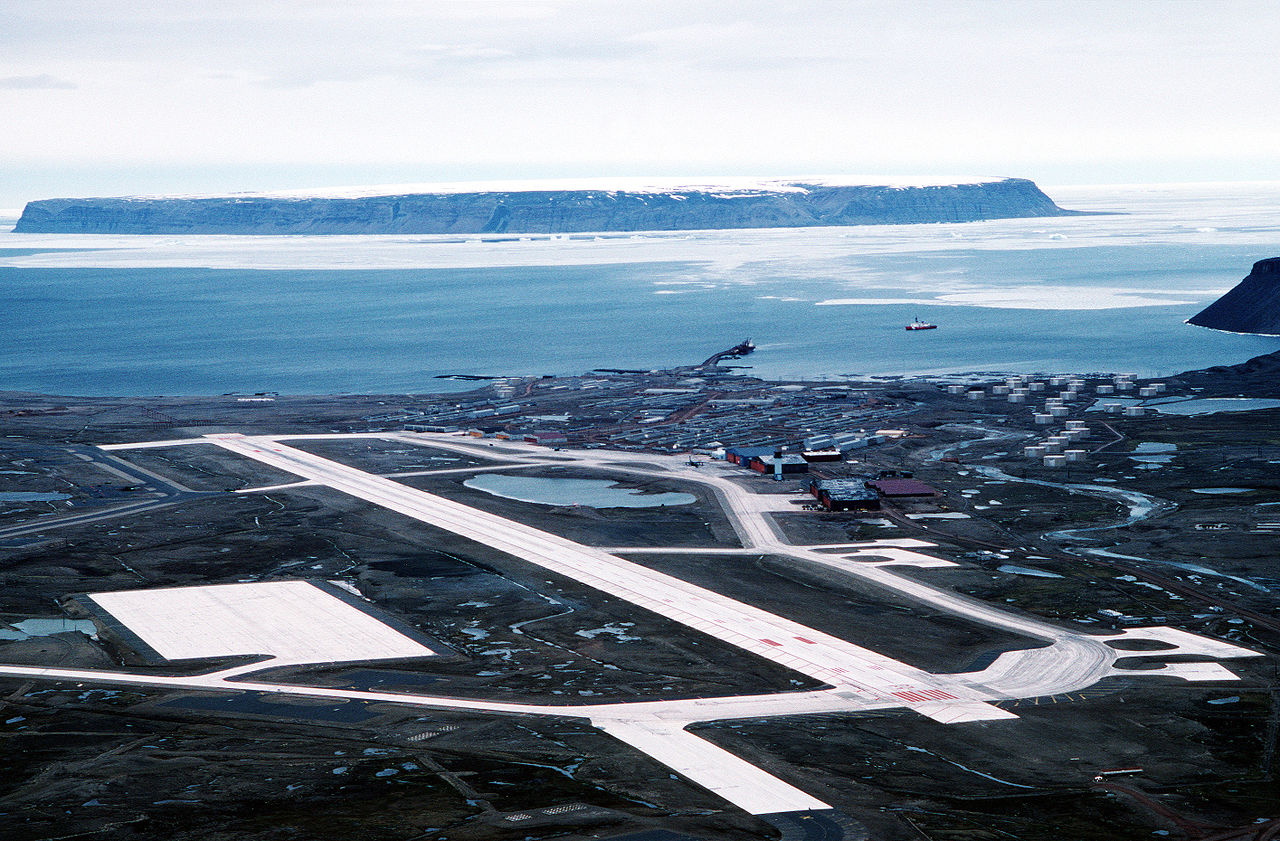
For a warning system to be of any use, it has to move quickly. In defence, those seconds matter, and Greenland buys precious time. Pituffik’s northern location gives the radar a strategic vantage point for missile warning, allowing the squadron to detect threats and provide early warning to national command authorities. [13] [12]
The missile warning system only has value while the base remains operational. If bad weather or failing infrastructure compromises its ability to function, the advantage of early warning is weakened. That is why runway maintenance, airfield upgrades and resilience investment matter. They help keep Pituffik operational in exactly the kind of harsh conditions it was built to withstand.
In January 2026, Task & Purpose and Stars and Stripes reported planned runway and facility improvements at Pituffik. Task & Purpose described the upgrades as “fairly routine”, while Stars and Stripes placed the work in Greenland’s “austere landscape”. [14] [15] The language sounds ordinary enough: resilience, reliability and continuity. And a routine maintenance project is not, by itself, evidence of panic. What matters here is the direction of travel across the wider record: an already essential installation is being kept resilient while Arctic capability and infrastructure expand around it. That is what I mean by perimeter hardening. If the pattern were moving the other way, with reduced resilience, shrinking capability or an easier path to withdrawal, the frame would fail.
Seed Question
Where is the line between routine maintenance and perimeter hardening? What evidence would show that Pituffik and the wider Arctic architecture are simply being maintained rather than strategically entrenched?
Paperwork builds the fortress
The panic room wasn’t built in 2026. Its legal foundations were laid in 1951, when the Defence of Greenland Agreement established the basis for a US defence presence and facilities in Greenland. [16] I think of it as a treaty chassis: a structure capable of carrying decisions made decades later. It is not a blank cheque, and consultation is still required. Governments change, but the agreement remains. That continuity matters because every new decision begins inside a defence relationship that already exists, rather than from a blank page.
In August 2004, the framework was amended and supplemented through the Igaliku agreements. [17] [18] By then, Greenland was no longer a colony but an equal part of the Kingdom of Denmark, and the old defence framework had to reflect that political reality. Greenland’s Home Rule Government was formally included in the 2004 agreement and signed it as part of the Kingdom of Denmark’s participation, with new procedures for consultation and cooperation. The treaty chassis survived, but it had been retrofitted to require formal consultation with Greenlandic authorities before significant changes to US military operations or facilities in Greenland.
This is how a fortress can grow without conquest. One agreement establishes the relationship. Later amendments reshape it. Procurement and infrastructure decisions then move through channels that are already open. Nobody in 1951 needed to foresee every runway upgrade, radar system or military decision that would follow. The agreement mattered because later governments would never have to start again from scratch.
"Nothing about us without us"
If you cite only Washington, Copenhagen, Brussels and NATO, you reproduce the chessboard view, where only the great powers get to move the pieces. Greenland’s government published its own foreign, security and defence policy for 2024 to 2033. [19] Its organising principle is clear: “Nothing about us without us”.
By publishing this document, Greenland drew a clear line. Decisions about its territory, security and future must include Greenlanders themselves. That insistence was visible beyond the policy document. On 17 January 2026, people marched in Greenland and Denmark against threats of a US takeover. [20]

The policy does not answer every question raised in this episode, nor does it make every outside security proposal automatically hostile. What it does make clear is that Greenland’s government refuses to let its country be treated like an empty square on somebody else’s map. On 1 January 2026, Greenland’s population was 56,740. [21] The governments and alliances shaping Arctic security represent populations vastly larger. That imbalance is precisely why “Nothing about us without us” matters.
The perimeter logic becomes easiest to see when the people living inside it have to remind everyone else that they are not part of the scenery.
How doctrine makes panic permanent
The US Department of Defense Arctic Strategy describes the region as an operational environment tied to deterrence, early warning and readiness. [22] Once the Arctic is treated as part of the warning and defence architecture, places like Pituffik are no longer judged in isolation. Their infrastructure, readiness and resilience become part of a much wider defence requirement.
Doctrine doesn’t remove political choice, but it does narrow the terms of the debate. Defence spending can be presented as a readiness requirement rather than one option among many. The question then shifts from whether a capability should exist to how quickly it can be delivered. Once those assumptions are built into budgets, procurement and military planning, political choices start to look like routine administration.
A note on who else is doing this
Western governments are not acting in an empty Arctic. Russia has its own Arctic strategy to 2035, and it treats the High North as central to both national security and economic survival. [23] [24] Russia wants to turn the Northern Sea Route into a transport corridor of global importance, competing with traditional routes such as the Suez Canal. It is working towards year-round navigation, expanding ports, communications and satellite coverage, and building a larger nuclear icebreaker fleet to keep the route open.
Russia has also been rebuilding and modernising its Arctic military presence. The strategy calls for increased combat capability to meet projected military risks, while much of the infrastructure is designed for both civilian and military use. The same ports, communications systems and transport routes that move goods can also support border control, resource protection and military operations.
The obvious counterargument is that Western Arctic hardening may simply be a response to Russia’s military expansion. Russia’s expansion is clearly part of the security picture. But its own strategy does not separate military capability from transport and economic infrastructure. It links greater combat capability with the ports, communications, icebreakers and transport infrastructure needed to develop the Northern Sea Route. The military competition and the route competition therefore overlap. One does not cancel out the other. [24] [22]
China published its own Arctic policy in 2018 and formally described itself as a “Near-Arctic State” and an important stakeholder in the region. [25] China has no territorial claim to the Arctic, but argues that non-Arctic states still have rights under international law to conduct scientific research, navigate Arctic waters and participate in the lawful use of its resources. The policy also promotes a “Polar Silk Road”, using emerging Arctic shipping routes to connect China more directly with Europe.
Beijing sees the Arctic as another possible trade corridor, [26] one that could shorten the journey between Northeast Asia and Europe and reduce dependence on the traditional maritime routes further south.
Russia is trying to turn the Northern Sea Route into a globally important transport corridor. China wants to help build a Polar Silk Road through the same region. Western governments are meanwhile spending more on surveillance, military capability and infrastructure across the High North. Their aims are different, but their attention is increasingly fixed on the same part of the world.
Seed Question
What evidence would convince you that Greenland's current military and infrastructure hardening is better explained by conventional Arctic security concerns than by the wider loss of strategic leverage argued in this episode?
The alliance machine
Greenland’s security arrangements also involve Denmark, the United States, NATO and, increasingly, the European Union. Denmark’s second Arctic and North Atlantic defence agreement committed DKK 27.4 billion to expanding its capabilities across the region. [27] [28] The agreement includes additional Arctic vessels, maritime patrol aircraft, a new air-surveillance radar in East Greenland, expanded drone capability and a new headquarters for the Joint Arctic Command in Nuuk. It also provides for a new subsea cable between Greenland and Denmark and plans for a Greenlandic Rangers unit, putting military capability, communications and local presence inside the same package.
The January 2026 proposals for an Arctic NATO mission and an EU security package widened the permission structure further. [2] [3] Decisions that might once have belonged to one government can now be framed as part of a wider allied requirement. Denmark can point to NATO. NATO can point to allied readiness. The EU can point to collective security and infrastructure resilience. Each institution gives the others another reason to keep moving in the same direction.
The data fortress
Greenland’s international connectivity currently depends heavily on the Greenland Connect system, linking the island to Canada and Iceland. [29] That is a lot of dependence to place on a relatively small number of cables. If one fails, is damaged or deliberately attacked, much more pressure falls on whatever remains.
To reduce that vulnerability, Denmark and Greenland are now investing in a new subsea cable connecting Greenland directly to Denmark. The same Arctic defence agreement also commits the parties to explore procuring capabilities for monitoring incidents affecting critical subsea infrastructure in the deep sea. [28] [30]
Greenland has also kept control of key telecommunications infrastructure close to home. Its telecommunications law gives Greenland Self-Government the exclusive right to construct and operate infrastructure connecting towns, settlements and Greenland with the outside world, subject to specified exceptions and liberalisation provisions. [31] The cables are civilian infrastructure, but once their ownership, protection and continued operation become security questions, they start becoming part of the strategic perimeter too.
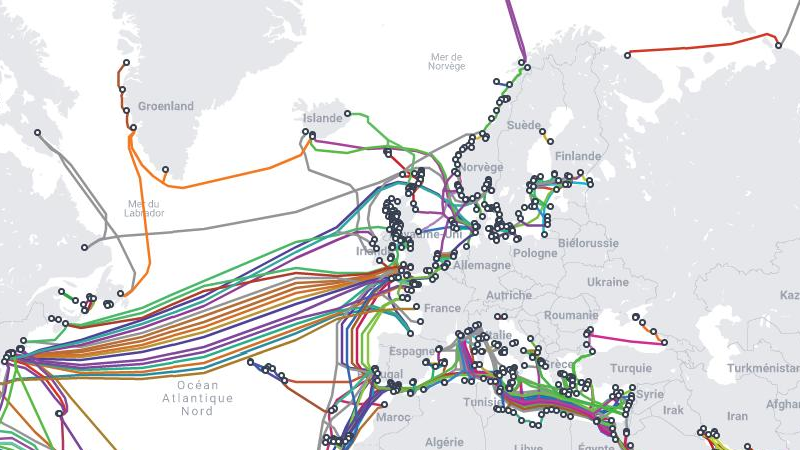
Greenland’s cables serve a different function from Pituffik: communications resilience. Once the defence agreement begins funding new connectivity and exploring the protection of subsea infrastructure, civilian communications enter the same security planning. That overlap is the data fortress.
Minerals: fuel, not fire
It would be easy to look at Greenland’s mineral wealth and assume that is what all this pressure is really about. I don’t think it is. Greenland mattered to the missile-warning system long before critical minerals became part of this story.
What the minerals do is give even more people a reason to care about what happens there. Greenland has significant critical raw material potential, with geological prospects comparable in scale to established mining regions such as Australia and Canada. [32] The EU-backed Amitsoq graphite project is a good example. The deposit contains exceptionally high-grade graphite, while China dominates global graphite production and has tightened export controls. [33] Greenland is already important for missile warning and Arctic access. Now its minerals matter to battery supply chains, the green energy transition and technologies used across modern defence as well.
That brings another crowd into the picture. Governments worried about strategic materials, mining companies seeking licences and investors looking for long-term supply all have a stake in what happens next.
Jobs, revenue and infrastructure matter to Greenland, and Greenlanders have their own reasons for approving or rejecting individual projects. But those decisions are now being made inside a much bigger international struggle over access to critical materials. [34]
Minerals did not create the panic room. They made Greenland more valuable, and gave more outside interests a reason to keep it inside the strategic perimeter.
Routes: the Arctic irony
There is an irony here. While Eurasian rail corridors are creating alternatives to some of the traditional maritime routes, diminishing sea ice is opening up the possibility of new ones through the Arctic. The Northwest Passage and Russia’s Northern Sea Route are becoming more important as a result. [26] [35]
An open route is not necessarily a useful one. Ice remains difficult and unpredictable, and commercial operators still have to contend with specialised vessels, insurance, regulation, limited port infrastructure and search-and-rescue capacity. MSC, one of the world’s largest container shipping companies, has said it will not use Arctic routes. [36] Others are already experimenting with them, but occasional voyages are still a long way from replacing established shipping lanes.
Governments are preparing for the possibility anyway. Ports, communications, navigation systems, ice-capable vessels and emergency infrastructure are being developed now. The Arctic can become strategically important long before these routes become commercially routine.
Greenland is caught between two changes. Land corridors are creating ways around the old maritime chokepoints to the south, while new maritime routes are beginning to open to its north. Either way, the map is changing around it.
Seed Question
How much does an alternative trade route have to carry before it begins to matter strategically? Is optionality itself enough to change state behaviour, or does the argument require evidence of significant trade actually moving away from established maritime routes?
The corridor pincer
Now let’s take a look at what happens when important alternative routes sit inside regions under pressure. To the south, the International North-South Transport Corridor connects Russia, Iran and India. [37]
Different places, different actors and different conflicts. The narrower question here is consequence, not coordination. When conflict, infrastructure delays or attacks on shipping make alternative routes harder to complete or use, existing maritime chokepoints retain more of their importance for longer.
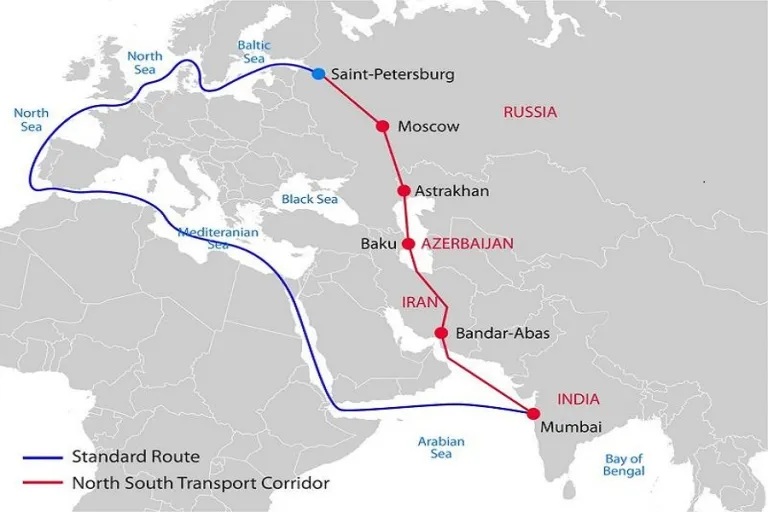
On 28 February 2026, US and Israeli strikes hit Iran. [38] The stated justification centred on Iran’s nuclear and ballistic missile programmes. Iran also carries a major share of the infrastructure needed to complete the International North-South Transport Corridor. The Eurasian Development Bank estimates that projects in Iran account for around 34% of the total value of ongoing and scheduled INSTC infrastructure development projects. [37]
The Rasht-Astara railway is the main missing rail link on the corridor’s western route, a 162-kilometre section inside Iran. Without it, cargo has to be transferred from rail to road and then back onto rail, adding time and cost to the journey. Russia is expected to provide a €1.3 billion intergovernmental loan towards completing the line, with completion expected by 2028. [39] Once complete, the section would allow container traffic to continue by rail towards the Iranian port of Bandar Abbas. The Eurasian Development Bank also shows how quickly the western corridor can operate by road when the borders work efficiently: Moscow to Bandar Abbas usually takes around six days, but border delays can extend that journey to between 10 and 13 days. [37]
I cannot show that the railway influenced the timing of the strikes. What I can show is the overlap: a state carrying one of the INSTC’s key bottlenecks was simultaneously under attack from the United States and Israel.
The Houthi attacks on Red Sea shipping from late 2023 add another part of the picture. [40] Around 15% of global trade normally passes through the Suez Canal. As the attacks intensified, major shipping companies controlling around half of the global container market began diverting vessels around the Cape of Good Hope instead, adding at least a week to some journeys and pushing up insurance costs.
Disruption on that scale shows why alternative routes attract investment. The INSTC, the Northern Sea Route and other bypasses become more attractive whenever the traditional chokepoints become slower, riskier or more expensive. Every serious disruption increases the value of having another way around.
Update, 19 March 2026: If the INSTC takes longer to become fully operational, existing maritime routes retain more of their importance for longer. That is the effect of delay I am tracking here, rather than a claim about why any of these conflicts began.
This is what I mean by the corridor pincer: several distinct pressures producing the same strategic consequence around important routes and junctions. It describes the effect of disruption, not a claim that the conflicts are coordinated or share a cause.
Live tracking of these developments is in Episode 0: Fortress of Fear.
Seed Question
Does the corridor pincer survive comparison? What other major trade corridors are currently operating without comparable disruption, and does adding those cases strengthen or weaken the pattern described here?
The bill comes due
Strategic systems are often discussed as though they exist above ordinary life. They do not. Someone hosts the base. Someone pays for the agreement. Someone lives with the decisions.
This is where strategic asymmetry matters. The relationship may be formally agreed, but the parties do not enter it with equal populations, military power or freedom to walk away. Cooperation can be genuine while the benefits, pressures and consequences remain uneven.
Who actually pays
Greenland lives with the sovereignty and development consequences. Its government has made clear that Greenlanders expect to be included in decisions affecting their territory and security. [19] But those decisions are increasingly being made under pressure from interests far larger than Greenland itself. Civilian infrastructure now sits inside defence planning, [28] while mineral development is becoming entangled with international competition over strategic materials. [33]
Denmark carries substantial financial and political responsibility. It is spending billions on new Arctic capabilities while trying to balance its defence relationship with the United States against Greenland’s demand for greater control over its own future. [27]
The wider US-led security system receives much of the early-warning and strategic benefit, but the United States also invests heavily in Pituffik itself. [15] Denmark is now committing billions to wider Arctic capabilities and carries much of the political machinery. Greenland provides the territory and lives with what follows. [27]
There is also a simpler cost. Money spent on military capability cannot be spent twice. Every decision to make the Arctic a greater strategic priority is also a decision about where public money, infrastructure and political attention will go.
“Much of the strategy is written elsewhere. The consequences still live in Greenland.”
Where this goes
Greenland shows one way power protects what it still controls: bases, treaties, surveillance and infrastructure. Episode II moves to Venezuela, where control works through law and money instead of territory.
Sanctions, recognition doctrine and legal decisions can determine who is allowed to control an asset, move money or claim ownership.
Carry-forward code: Territorial panic presented as security.
Seed Question
Can you find evidence, historical comparisons or current cases that challenge the argument that Greenland is being hardened as part of a wider struggle over strategic access, routes and leverage?
Own This Part
Keep a permanent offline copy of this part, with the full text and the complete formatted edition ready to download.
Members and Founding Members pay £2.49, applied automatically at checkout when signed in.
Resources
References
- [1] Reuters (17 Jan 2026): Trump vows tariffs on European nations over Greenland :Tariff threat used as the January 2026 trigger exhibit.
- [2] Reuters (19 Jan 2026): Denmark and Greenland suggest an Arctic NATO mission :Allied positioning in response to Greenland pressure.
- [3] Reuters (20 Jan 2026): EU Commission working on package to support Arctic security :EU signalling of an Arctic security support package.
- [4] Reuters (24 Jan 2026): Trump's centralised diplomacy creates whiplash for allies :Diplomatic whiplash framing used for the live snapshot.
- [5] UK House of Commons Library research briefing (Greenland related) :Context briefing and source for Trump's exact Greenland purchase wording.
- [6] Cambridge History of War (2025): Navies, technology, and organisation, 1648 to 1815 :Historical basis for the relationship between European maritime empire and naval power from the late sixteenth century onward.
- [7] SCIO/Xinhua (25 Nov 2025): Xi'an-Prague fixed-schedule freight train cuts transit to 11 days 4 hours :Official reporting on an 11-day fixed-schedule China-Europe rail service.
- [8] State Council/Xinhua (21 Jun 2024): Guangzhou-Warsaw fixed-schedule freight train expected in 16 days :Official reporting on a 16-day fixed-schedule China-Europe rail service.
- [9] Danish Armed Forces (15 Jan 2026): Increased presence and exercise activity in Greenland :Official record of Danish military activity already underway before the tariff threat.
- [10] European Commission speech (Davos): Arctic security package signalling :Official Commission record of von der Leyen's Greenland and Arctic security remarks.
- [11] US Space Force: Pituffik Space Base overview :Official description of Pituffik's mission and role.
- [12] 12th Space Warning Squadron fact sheet :Primary source for the missile-warning mission and response-time framing.
- [13] US Air Force (7 Apr 2015): Space warning squadron keeps watch at the top of the world :Official account of Pituffik's strategic northern vantage point and missile-warning role.
- [14] Task & Purpose (17 Jan 2026): Pituffik runway improvements :Reporting on planned Pituffik runway and infrastructure work.
- [15] Stars and Stripes (18 Jan 2026): Airfield upgrades at Pituffik :Reporting on solicitation details, infrastructure context and US investment at Pituffik.
- [16] Defence of Greenland Agreement (1951) full text :Primary legal chassis for the enduring US defence relationship in Greenland.
- [17] Official PDF: 2004 agreement text :Primary text of the 2004 amendment and supplement to the 1951 agreement.
- [18] UN Treaty Collection registration of 2004 agreement :International registry record confirming formal treaty participation.
- [19] Government of Greenland: Foreign, Security and Defence Policy 2024 to 2033 (PDF) :Greenlandic agency anchor and 'Nothing about us without us' principle.
- [20] AP (17 Jan 2026): Thousands march in Greenland against US takeover threats :Public protest and local agency context.
- [21] Statistics Greenland: Population estimates, 1 January 2026 :Official population table result recording 56,740 residents on 1 January 2026.
- [22] US Department of Defense Arctic Strategy 2024 (PDF) :US Arctic doctrine, deterrence, warning, readiness and infrastructure resilience.
- [23] Reuters (21 Jan 2026): What are military assets in the Arctic? :Contemporary inventory and Russia Arctic military presence context.
- [24] Russia Arctic Strategy to 2035 (English PDF) :Russian doctrine on Arctic transport, infrastructure, economic development and military capability.
- [25] China Arctic Policy white paper (2018) :Official Chinese Arctic policy, Near-Arctic State framing and Polar Silk Road.
- [26] Nature Communications (2025): Arctic route access implications :Evidence on changing Arctic route access, distance and trade implications.
- [27] Danish MoD: Second Agreement on the Arctic and North Atlantic (summary, DKK 27.4bn) :Official summary of capability expansion and funding.
- [28] Danish MoD: Second Agreement publication (English PDF) :Primary PDF for detailed capability, cable, monitoring and Rangers provisions.
- [29] Tusass: Submarine cable infrastructure :Primary Greenland telecom source for Greenland Connect routes, redundancy and supply security.
- [30] High North News: Denmark strengthens Arctic defence, subsea cable included :Reporting on the Denmark-Greenland cable inclusion in the defence agreement.
- [31] Greenland Self-Government (24 Feb 2025): Consolidated Act on Telecommunications and Telecommunications Services :Primary legal source for Greenland's exclusive-right framework over telecommunications services and infrastructure connecting towns, settlements and Greenland with the outside world.
- [32] GEUS MiMa: Critical raw materials potential (PDF) :Critical raw material potential, graphite and geological comparison evidence.
- [33] Reuters (9 Dec 2025): EU-backed graphite permit :Amitsoq grade, graphite supply-chain competition and strategic-material context.
- [34] Government of Greenland: Amitsoq graphite exploitation licence :Primary Greenland licensing and local-benefit record.
- [35] The Cryosphere (2025 PDF): Northwest Passage conditions :Scientific evidence on Northwest Passage ice conditions and variability.
- [36] gCaptain (Sept 2025): MSC reaffirms Arctic shipping ban as Chinese lines expand Northern Sea Route :Major operator reluctance and evidence of other operators experimenting with Arctic routes.
- [37] Eurasian Development Bank (2022): International North-South Transport Corridor - Investments and Soft Infrastructure (PDF) :Primary EDB report for INSTC investment shares, bottlenecks and Moscow to Bandar Abbas road transit-time context.
- [38] Reuters via Investing.com (28 Feb 2026): Israel and US launch strikes on Iran :Iran strike timing and public nuclear-and-missile programme framing.
- [39] Interfax (2023): Rasht-Astara railway completion expected by 2028 :Rasht-Astara length, financing and completion-target context.
- [40] Reuters via Investing.com (18 Dec 2023): Red Sea attacks force rerouting of vessels :Houthi attacks, Suez traffic and container-shipping rerouting context.
The core evidence base is limited to sources and events available up to 28 February 2026. A clearly dated 19 March 2026 update is retained where relevant. The evidence pack prioritises primary sources, treaty records, doctrine documents, government releases, and infrastructure documentation. Live developments are tracked in Episode 0: Fortress of Fear. Interpretation is explicitly marked and constrained to what the cited record supports.
These sources are provided for verification, study and context. They represent diverse perspectives and are offered as reference points, not as doctrinal positions.
Link unavailable? Paste the URL into web.archive.org to find an archived snapshot. Most sources in our evidence packs are preserved there.
Support The Gnostic Key
The Gnostic Key is independently researched, written, and built. If the work has value to you, you can make a one-off contribution to help keep TGK independent.