
The recognition switch
Recognition sounds almost ceremonial. One government declaring which foreign authority it accepts as legitimate. In practice, it can operate as a legal switch. It does not change who controls the territory. It changes whose authority the recognising state is prepared to accept in law.
Two boards claimed exclusive authority to act for the same institution, Banco Central de Venezuela. The Maduro Board had been appointed by Nicolás Maduro. The rival Guaidó Board was an ad hoc board appointed under the transition statute adopted after Juan Guaidó declared himself interim president. [2]
One side exercised power through the Venezuelan state. The other was recognised by the British government. When the dispute reached the English courts, nearly two billion dollars of Venezuela’s gold sat between those two realities while the courts worked through which board could lawfully give instructions about it.
Under the One Voice Principle, recognition of a foreign head of state belongs to the executive. The courts are required to accept that recognition as conclusive because the British state cannot speak with one voice through ministers and another through its judges. [2] [5]
The Supreme Court treated the government’s 4 February 2019 statement as clear and unequivocal recognition of Guaidó as Venezuela’s constitutional interim president. For the purposes of English law, Maduro was no longer recognised as Venezuela’s President. Whatever power he still exercised inside Venezuela, Britain had already decided that his presidential authority no longer counted here. [2]
Venezuela’s Supreme Tribunal of Justice had declared the Guaidó appointments invalid. The English courts still had to decide whether those judgments should be recognised and given effect in English law, whether public policy stood in the way, and how the Act of State doctrine affected the validity of acts carried out inside Venezuela.
Britain had already decided whose claim to presidential authority English law had to accept. The courts were then left to decide whether appointments made under that authority were themselves legally valid.
Britain recognised Guaidó as President while continuing full diplomatic relations with Maduro’s government. Maduro’s ambassador, Mrs Maneiro, remained in London after presenting her credentials to the Queen. Britain’s ambassador in Caracas, Andrew Soper, remained accredited to Maduro. Meanwhile Vanessa Neumann, Guaidó’s representative in London, was not granted diplomatic status. [5]
Guaidó’s recognition did not last forever. On 30 December 2022, Venezuela’s 2015 National Assembly voted to disband the interim government and the office of constitutional interim President with effect from 5 January 2023. Britain said it respected that decision, while continuing not to accept the legitimacy of Maduro’s administration. [20]
Ending Guaidó’s recognition did not unwind what had already happened in the courts. The disputed central-bank appointments had been made while Britain recognised Guaidó, and the English courts would continue dealing with what that earlier recognition meant for those acts. [22]
The gold did not move, but the legal door was closed.
Seed Question
If a country remains the legal owner of an asset, but another government decides which authority can speak for that owner in law, where does practical control actually sit?
The permission system
Sanctions are usually presented as punishment. You did something wrong, so we cut you off. But punishment is only part of what they can do.
A sanctions regime can make prohibition the default and permission the exception. Transactions that would otherwise be prohibited can move through licensed corridors, and those corridors open only when a regulator decides they can.
In the United States, that regulator is OFAC, the Office of Foreign Assets Control. It does not need to own an asset or physically seize it to affect what happens next. It can prohibit a transaction, issue a licence, postpone an authorisation or require the parties to obtain separate permission.
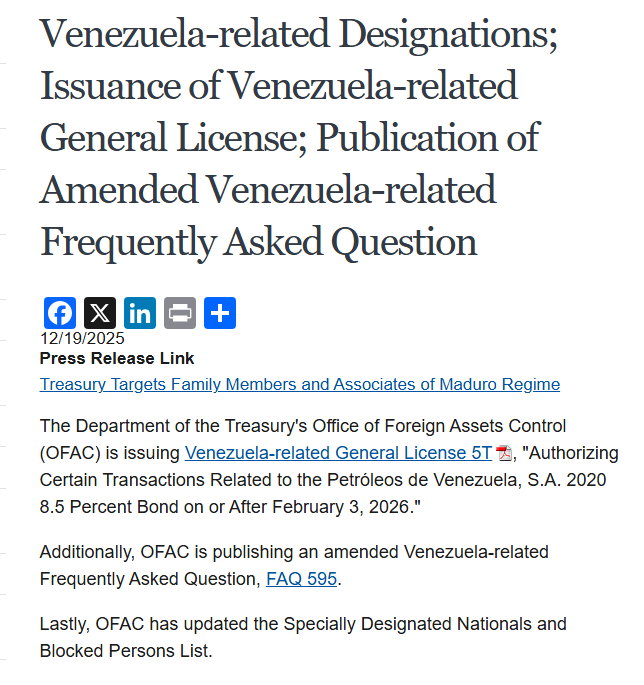
The PdVSA 2020 8.5 per cent bond shows how much power sits inside that decision. The bond was secured by a pledge of 50.1 per cent of the equity in CITGO Holding, Inc., placing a controlling stake in the corporate chain above CITGO behind the debt. General Licence 5 had originally authorised specified transactions that would otherwise have been prohibited, allowing bondholders a route towards the pledged collateral. On 24 October 2019, General Licence 5A superseded it and delayed when that authorisation could take effect. [6]
General Licence 5T, issued on 19 December 2025, set 3 February 2026 as the next effective date. [7]
It moved again. On 18 June 2026, General Licence 5X pushed the date to 4 August. [8]
It never got there. On 3 August 2026, one day before 5X was due to take effect, OFAC superseded it in its entirety with General Licence 5Y. As of this episode’s evidence cutoff, 17 September 2026 is the next date on which the general authorisation is due to take effect. [19]
And even when the gate opens, Washington does not simply hand over the keys. Restructuring or refinancing can still require a separate specific licence from OFAC. Venezuela may own the asset, and the bondholders may hold enforceable rights against the collateral, while another government still controls whether particular transactions involving it are legally permitted.
Seed Question
When prohibition is the default and access depends on licences issued by another government, at what point does sanctions enforcement become control over another state's economic choices?
The vault that cannot be opened
The Bank of England was not claiming the gold for itself. In the litigation it took the position of a stakeholder: a neutral custodian faced with conflicting instructions from two boards, each claiming exclusive authority to act for Banco Central de Venezuela. The bank asked the courts to determine whose instructions it could lawfully follow.
Britain was not transferring Venezuelan bullion into the British Treasury. Ownership remained with the Venezuelan central bank. The fight was over which Venezuelan authority Britain would accept as having the legal right to speak for that owner.
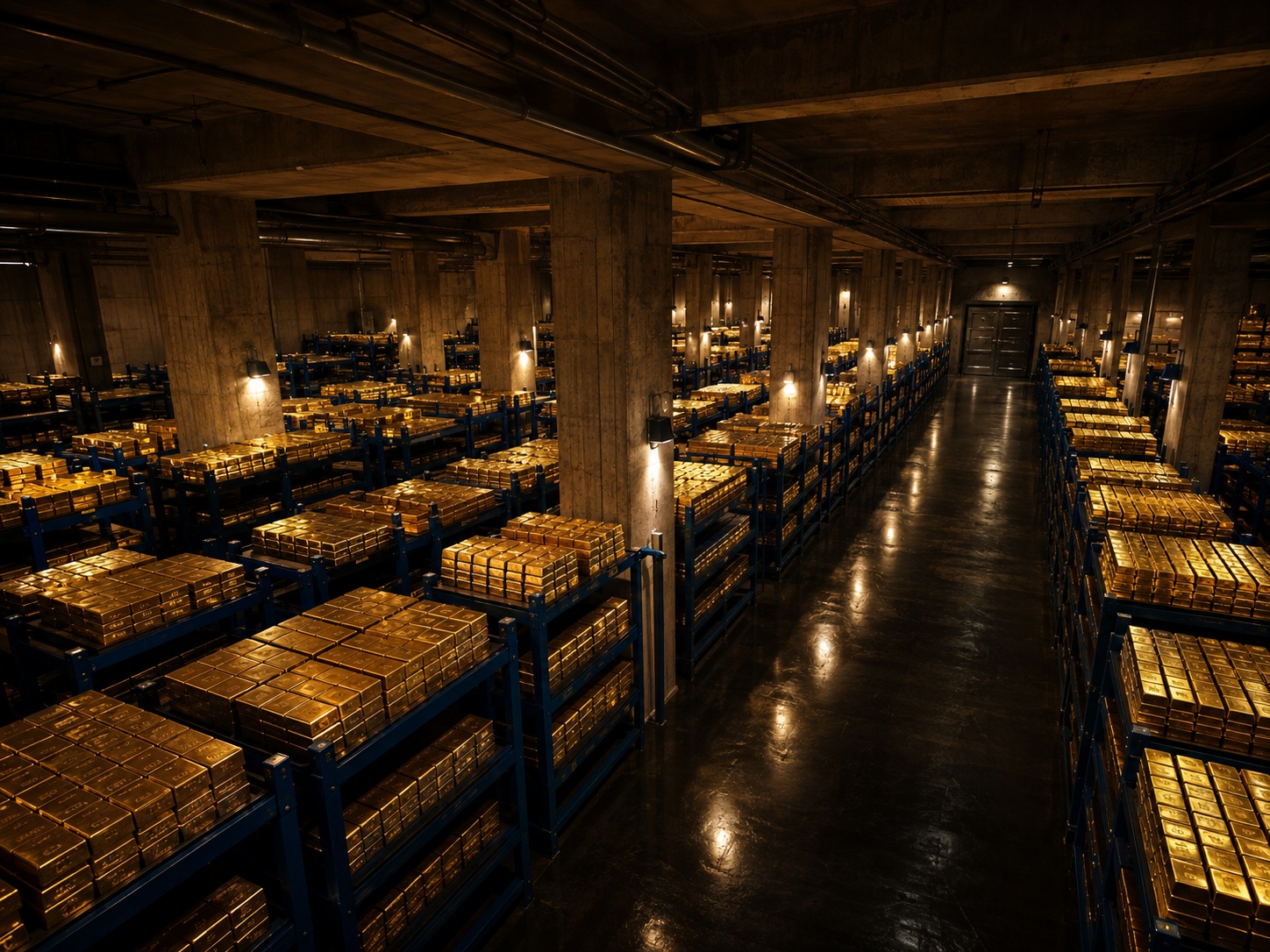
There was another pot of money caught in the same dispute. Deutsche Bank had been involved in a gold-swap arrangement whose proceeds, approximately US$120 million, were being held by court-appointed receivers while the competing boards fought over authority. So this was bigger than a pile of bars in one London vault. It exposed the problem that appears when ownership, custody and the authority to give instructions about an asset sit in different hands. [22]
The Supreme Court sent the unresolved questions back to the Commercial Court. In July 2022, the court refused to recognise the Venezuelan Supreme Tribunal decisions that purported to nullify the Guaidó appointments. The Court of Appeal upheld the central result in June 2023, focusing on the fact that the appointments had been made during the period when Britain recognised Guaidó. [21] [22]
The Maduro Board tried to take the case back to the Supreme Court. Permission to appeal was refused in November 2023. [23]
And the dispute outlived Guaidó himself. In July 2026, Delcy Rodríguez was still asking Britain to release roughly 31 tonnes of Venezuelan gold held at the Bank of England. The bullion was still there, still Venezuelan, and still beyond the government’s reach. [24]
The political recognition that started the fight had changed. The practical problem had not. Venezuela remained the owner. The Bank of England remained the custodian. The gold still could not be reached by the government claiming it.
The execution engine
The Venezuelan gold case was about authority over an asset already sitting in London. CITGO is different. The execution engine here is creditor enforcement, and the people trying to reach the asset have judgments and arbitral awards worth billions of dollars that they are trying to collect.
Crystallex’s case arose from Venezuela’s expropriation of its interests in the Las Cristinas gold project. It went to international arbitration, won an award against Venezuela and then came to the United States looking for assets against which that award could actually be enforced. [25]
ConocoPhillips arrived through its own disputes over the expropriation of interests in Venezuelan oil projects. Its companies obtained a major ICSID award against Venezuela, while another ConocoPhillips claim arose directly against PdVSA through a different contractual route. [26]
Venezuela had expropriated investments and the resulting awards gave the companies legal claims they were entitled to pursue.
Venezuela’s state oil company, PdVSA, owns PDV Holding, Inc. in Delaware. PDV Holding owns CITGO Holding, which in turn owns CITGO Petroleum. So if creditors can reach the shares of PDV Holding, they can reach the corporate chain through which Venezuela controls CITGO. [9]
Crystallex’s judgment was against Venezuela, while the shares sitting above CITGO belonged to PdVSA. To cross that gap, Crystallex argued that PdVSA was Venezuela’s alter ego: formally separate, but sufficiently controlled by the state that its assets could be reached to satisfy the Republic’s debt. The Delaware court accepted that route and the Third Circuit upheld the alter-ego finding. [25]
The mechanism even comes wrapped in the kind of language Empire loves: a writ of attachment fieri facias. Strip the Latin away and the idea is much simpler. The court can bring property belonging to the judgment debtor into the enforcement process so that a creditor can pursue it to satisfy the debt.
By this point a debt claim against Venezuela has become a legal route into the ownership structure above CITGO. No loophole is required. The extraction sits inside the procedure.
Scheduled seizure
What happens next is what the Delaware court calls the Sale Process. The shares are now legally within reach. Next comes the sale. TGK calls the political consequence scheduled seizure.
What was placed on that timetable was not an individual CITGO refinery or petrol station. It was shares in PDV Holding, Inc., the company sitting at the top of Venezuela’s ownership chain above CITGO. [10]
From there, the potential loss of a strategic national asset starts looking like ordinary corporate administration. Potential buyers get access to a data room. Bids are invited. Deadlines are set. Objections are filed. Hearings are scheduled. A stalking horse bidder can be selected to establish a floor price and receive agreed bidder protections. Under the court timetable, stalking-horse bids were due by 7 March 2025.
If one was selected, competing buyers then had a 30-day topping period to beat the offer. Discovery continued through May, with the formal discovery period ending on 30 May 2025, before the process moved to a sale hearing in Wilmington later that summer. [10]
The process includes competitive bidding, due diligence, objections and judicial approval. By this stage, the possible loss of one of Venezuela’s most important foreign assets is sitting inside a data room, bid protections, filing deadlines and a court calendar.
The court still does not hold every key. The Delaware court has said it can continue taking steps towards an auction while the PDV Holding shares remain blocked property, but no sale can close unless the relevant parties obtain the necessary OFAC licences or the sanctions regime changes so that the shares are no longer blocked. [27]
Nobody needs to storm CITGO and plant a flag on the refinery. The potential loss of control is put on a calendar instead. Filing date. Bid deadline. Hearing. Approval. Control of a strategic asset moves towards somebody else’s hands through a process so administrative that, if you stare at the paperwork for long enough, you can almost forget what is actually being transferred.
Seed Question
Where should the line sit between legitimate creditor enforcement and dispossession when a lawful court process can reach a strategic national asset?
Enforcement without war
At sea, all that polite legal language eventually has to meet the physical world.
In August 2020, the US Department of Justice announced the confiscation of approximately 1.116 million barrels of Iranian petroleum being carried towards Venezuela aboard four tankers: the Bella, Bering, Pandi and Luna. [11]
The United States did not seize those four ships. It went after the petroleum cargo through civil forfeiture, alleging that the shipment was connected to Iran’s Islamic Revolutionary Guard Corps. With the involvement of foreign partners, the oil was transferred into US custody.
On 10 December 2025, the US Coast Guard boarded and seized the M/T Skipper on the high seas after it had departed Venezuela. The seizure was carried out under a warrant signed by a US magistrate judge on 26 November. [12] [30]
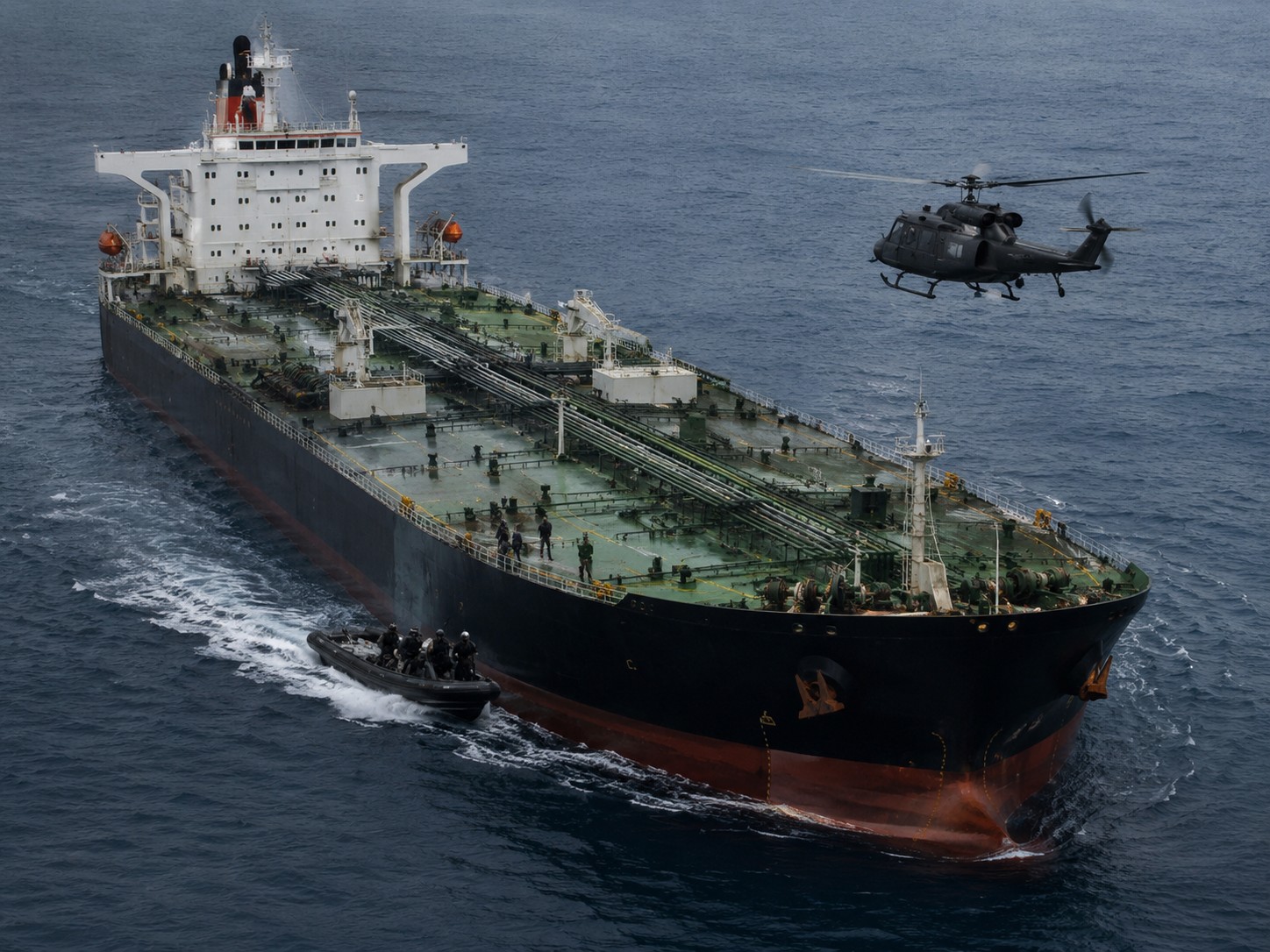
Washington called it enforcement. Venezuela called it theft and international piracy. What physically happened is not in dispute: US personnel boarded a tanker at sea and took control of it under authority issued by a US court. [12]
The two cases were not the same legal action. In 2020, the forfeiture process changed custody of petroleum cargo while leaving the four vessels themselves alone. In December 2025, the warrant was enforced against the tanker itself.
The paperwork did not replace force. It authorised it.
Intervention and conditional reopening
Then the political order at the top of Venezuela was changed by force.
On 3 January 2026, US forces entered Venezuela, captured Nicolás Maduro and his wife Cilia Flores, and removed them from the country to face charges in the United States. Washington called it a capture. From where I am sitting, a foreign military entering another country, taking its sitting president and flying him out looks a lot like kidnapping. [3]
This was different from what had happened with Guaidó. Britain had recognised Guaidó while Maduro continued running the Venezuelan state. In January 2026, Maduro was physically gone. Two days after his removal, Delcy Rodríguez, who had served as his vice-president, was formally sworn in as acting president inside Venezuela itself. [4]
The Venezuelan state did not disappear with Maduro. Much of the political, military and administrative structure remained in place under Rodríguez. What changed almost immediately was the relationship between that state and Washington.
The machinery stayed. What Washington changed was the permissions inside it, one licence at a time.
On 29 January, OFAC issued General Licence 46, opening a route for certain transactions involving Venezuelan-origin oil. [14]
On 3 February, General Licence 47 opened another corridor, authorising certain transactions involving the sale and supply of US-origin diluents to Venezuela. [16]
By June, General Licence 46C authorised established US entities to lift, export, sell, market and transport Venezuelan-origin oil under specified conditions. Non-US companies could provide supporting services and the oil could later move further into the international market. But the first authorised transaction with the blocked Venezuelan interest was structured around an established American entity. [13]
The licence also restricted who could use that route. It excluded specified Russian, Iranian, North Korean and Cuban counterparties and restricted certain Chinese-controlled entities. It required reporting on the parties involved, quantities, values and destinations. Certain payments involving blocked Venezuelan persons were directed into Foreign Government Deposit Funds or other accounts instructed by the US Treasury. [13]
General Licence 47A imposed a similar set of conditions on US-origin diluents. Venezuela could receive material needed to blend and move its heavy crude, but those transactions too existed inside conditions written by the US Treasury. [15]
Maduro was gone and Venezuelan oil was moving again, but Washington still controlled the terms on which much of that trade could happen.
Empire does not always need to own the resource. Sometimes controlling the routes around it is enough. Leave Venezuela’s name on the oil. Leave the flag flying over the wells. Then make access to parts of the market dependent on licences, approved counterparties and conditions written in another capital.
The reserve gate
The oil licences controlled access to markets. Venezuela’s reserve assets put the same problem somewhere else: access to assets it already held.
At the IMF, Venezuela held approximately SDR 3.6 billion in Special Drawing Rights, worth roughly US$4.9 billion at the time. These were existing international reserve assets recorded for Venezuela. [17] [18]
This was not a new bailout or a grant waiting to be handed over. The question was whether Venezuela could exercise rights over assets already recorded as its own.
IMF dealings with Venezuela had been paused in 2019 because there was insufficient clarity among member governments over which Venezuelan government should be recognised. By April 2026, IMF members representing more than half of the Fund’s total voting power recognised or dealt with the Rodríguez administration as Venezuela’s government. The IMF said that this resolved the recognition issue and restored Venezuela’s ability to exercise its rights over the SDR holdings. [18]
This was not a new bailout or a grant waiting to be handed over. The question was whether Venezuela could exercise rights over assets already recorded as its own. Any future IMF financing was a separate matter. It would still require a formal request, policy commitments and the Fund’s normal lending process [18]
Recognition did not create US$4.9 billion for Venezuela.
The bill comes due
All of this sounds remarkably bloodless on paper. Recognition. Licences. Attachments. Court orders. None of those words sound like a family working out what it can still afford.
Venezuela’s economic collapse had plenty of causes of its own. Falling oil revenue, fiscal deficits, shortages of dollars, inflation and years of domestic economic failure were already tearing through the economy before the most severe US sanctions arrived. In 2021, the US Government Accountability Office identified multiple causes of the country’s decline, including falling oil prices and years of mismanagement at PdVSA. But it also concluded that US sanctions, particularly those imposed on PdVSA in 2019, likely contributed to the steeper economic decline by restricting revenue from oil production. The GAO also found that humanitarian organisations encountered sanctions-related obstacles despite the existence of humanitarian exemptions. [28]
A study by economist Francisco Rodríguez, published in the Latin American Economic Review in 2022, used monthly firm-level production data from Venezuela’s Orinoco Basin. It found particularly large production losses after financial and oil sanctions among firms that had previously depended on international credit. For that specific group of firms, the estimated sanctions effect accounted for around half of the subsequent output decline. [29]
Across the Orinoco Basin as a whole, the contribution identified through that particular credit channel was smaller, at roughly one-quarter of the observed decline. Rodríguez does not extend that estimate to Venezuela’s entire oil industry. Rodríguez found an effect, but not a uniform one, and sanctions were only one part of a much larger economic collapse. [29]
Sanctions do not land on an abstract thing called a state. States do not need to eat, collect wages or keep a household running. People do. Economic restrictions move through companies that cannot get paid, importers that cannot buy, workers whose wages stop meaning anything.
Venezuela’s own governments played a major part in the disaster. The evidence is clear on that. But sanctions, blocked assets and restricted access to finance were not economically neutral additions to an already damaged economy. Their costs travelled through oil revenue, credit, payments and imports until they reached people who never signed a bond, appointed a central-bank board or sat in a room at OFAC.
Where this goes
Very little in this episode required anyone to break the rules. The rules are the story.
Britain could recognise one Venezuelan president while another still ran the country, changing whose authority counted in an English courtroom. Creditors with legitimate awards could use established legal doctrines to reach the ownership chain above CITGO. Washington could prohibit transactions involving Venezuelan oil and later reopen selected routes through licences of its own design. At the IMF, recognition could affect whether Venezuela was able to exercise rights over reserve assets already recorded as its own.
The courts are real, the claims are real and the licences are real. That is the argument, not an objection to it.
This is Empire doing what Empire has always done best: turning power into administration. Bury the political consequence under enough procedure and questioning the outcome starts to sound like questioning the law itself.
Lawful and just are not the same question.
Who built a system capable of doing this in the first place?
None of these powers began with Venezuela. Recognition doctrine, sanctions and creditor enforcement were already sitting in the machinery long before this episode began. The Empire Codes is going backwards to find out where those powers came from, who built them and how they became embedded in the machinery.
Episode III takes us into something even more ordinary: tariffs. A government puts a tax on goods crossing its border. Boring enough.
Until you ask what happens when the country imposing it controls a market everybody else needs.
Next: Episode III: The Tariff Guillotine
Carry-forward code: The emergency changes. The power stays.
Seed Question
Can you find comparable cases where these same recognition, licensing or asset-enforcement powers were used against a state aligned with the governments exercising them?
Own This Part
Keep a permanent offline copy of this part, with the full text and the complete formatted edition ready to download.
Members and Founding Members pay £2.49, applied automatically at checkout when signed in.
Resources
References
-
[1] UK recognises Juan Guaidó as interim President of Venezuela (GOV.UK)
:Recognition statement used as the documentary anchor for UK executive posture.
-
[2] UK Supreme Court press summary, UKSC 2020/0195 (Venezuela gold dispute)
:One voice principle framing and gold dispute synopsis.
-
[3] Reuters: US forces capture Nicolás Maduro and remove him from Venezuela (3 Jan 2026)
:Reports the US military operation in which Nicolás Maduro and his wife were captured and flown out of Venezuela.
-
[4] Reuters: Delcy Rodríguez sworn in as Venezuela's interim president (5 Jan 2026)
:Reports Rodríguez's formal assumption of the interim presidency following Maduro's capture and removal.
-
[5] Court of Appeal judgment, [2020] EWCA Civ 1249 (Maduro Board v Guaidó Board)
:Application of the one voice doctrine in the recognition dispute.
-
[6] OFAC FAQ 595 (CITGO shares and PdVSA 2020 bond restrictions)
:States that relevant transactions remain prohibited unless specifically authorised and records the authorisation gap.
-
[7] OFAC Recent Actions, issuance of General Licence 5T, 19 December 2025
:Records the issuance of General Licence 5T, which initially set 3 February 2026 as the effective date for specified transactions involving the PdVSA 2020 8.5 per cent bond.
-
[8] OFAC Recent Actions, issuance of General Licence 5X, 18 June 2026
:Records the issuance of General Licence 5X and the amendment of FAQ 595, delaying effectiveness until 4 August 2026.
-
[9] District of Delaware opinion and order (attachment pathway), PDVH/PDVSA context
:Court record describing the attachment and enforcement pathway involving shares in PDV Holding and the corporate structure above CITGO.
-
[10] District of Delaware order, Sale Process and Litigation (1:23-mc-00608-LPS, Doc 59)
:Court-supervised sale-process mechanics for shares in PDV Holding.
-
[11] DOJ press release: forfeiture of Iranian petroleum cargo carried aboard four tankers
:Documents the civil-forfeiture seizure of petroleum cargo bound for Venezuela, distinguishing the confiscated fuel from the vessels carrying it.
-
[12] Reuters report on US seizure of a sanctioned oil tanker near Venezuela (11 Dec 2025)
:Recent illustration of sanctions-linked enforcement action reported by Reuters.
-
[13] OFAC General Licence 46C: Venezuelan-origin oil and petrochemical products (10 June 2026)
:Authorises specified transactions involving Venezuelan-origin oil and petrochemical products by established US entities, subject to contractual, payment, counterparty, vessel and reporting conditions. It replaced and superseded General Licence 46B on 10 June 2026.
-
[14] OFAC issuance of Venezuela-related General Licence 46 (29 January 2026)
:Official OFAC notice recording the initial issuance of General Licence 46, authorising certain activities involving Venezuelan-origin oil.
-
[15] OFAC General Licence 47A: sale of US-origin diluents to Venezuela (10 June 2026)
:Authorises specified transactions necessary for the sale and delivery of US-origin diluents to Venezuela, subject to contractual, counterparty, vessel and reporting conditions. It replaced and superseded General Licence 47 on 10 June 2026.
-
[16] OFAC issuance of Venezuela-related General Licence 47 (3 February 2026)
:Official OFAC notice recording the initial issuance of General Licence 47, authorising the sale of US-origin diluents to Venezuela.
-
[17] Reuters: IMF ties and SDR access contingent on recognition (15 Jan 2026)
:Reports the IMF recognition issue, the voting-power threshold for renewed engagement and the scale of Venezuela's Special Drawing Rights holdings.
-
[18] IMF: Re-engagement with Venezuela, frequently asked questions (21 Apr 2026)
:Confirms the resumption of IMF engagement with Venezuela and renewed access to approximately US$4.9 billion in existing Special Drawing Rights.
-
[19] OFAC General Licence 5Y: PdVSA 2020 8.5 per cent bond (3 Aug 2026)
:Superseded General Licence 5X on 3 August 2026 and set 17 September 2026 as the next effective date for specified transactions involving the PdVSA 2020 8.5 per cent bond.
-
[20] UK Government position on Venezuela (12 Jan 2023)
:Records the 2015 Venezuelan National Assembly's decision to disband the interim government and Juan Guaidó's office with effect from 5 January 2023, and the UK government's response.
-
:Commercial Court judgment on remittal from the Supreme Court, refusing recognition of Venezuelan STJ decisions purporting to nullify the Guaidó Board appointments.
-
[22] Deutsche Bank AG (London Branch) v Central Bank of Venezuela [2023] EWCA Civ 742
:Court of Appeal judgment upholding the refusal to recognise the relevant Venezuelan STJ decisions, with focus on the period when the disputed appointments were made while the UK recognised Guaidó.
-
[23] UK Supreme Court: Permission to Appeal, Maduro Board v Guaidó Board (20 Nov 2023)
:Records the Supreme Court's refusal of permission to appeal from [2023] EWCA Civ 742 because the proposed appeal did not raise an arguable point of law.
-
[24] Reuters: Venezuela seeks release of frozen overseas assets after earthquakes (8 Jul 2026)
:Reports Delcy Rodríguez's renewed request for release of approximately 31 tonnes of Venezuelan gold held at the Bank of England and confirms that the bullion remained inaccessible amid the long-running dispute.
-
[25] Crystallex International Corp. v Bolivarian Republic of Venezuela, 932 F.3d 126 (3d Cir. 2019)
:Third Circuit judgment describing Venezuela's expropriation of Crystallex's Las Cristinas mining interests, the resulting arbitral award, the PDVSA alter-ego finding and attachment of PDV Holding shares.
-
:Third Circuit judgment describing the more than US$8.5 billion ICSID award arising from Venezuela's expropriation of ConocoPhillips interests in several oil projects and the subsequent enforcement effort against PDVSA-linked assets.
-
[27] District of Delaware memorandum order on PDVH shares and OFAC licensing (4 May 2022)
:Court order stating that steps towards an auction of blocked PDV Holding shares could proceed, while no sale could close unless relevant parties obtained specific OFAC licences or the sanctions regime changed so the shares were no longer blocked property.
-
:US government assessment finding multiple causes behind Venezuela's economic decline while concluding that US sanctions, particularly the 2019 PdVSA sanctions, likely contributed to the steeper decline and created obstacles for humanitarian organisations.
-
[29] Francisco Rodríguez: Sanctions and Oil Production — Evidence from Venezuela's Orinoco Basin
:Author's research page for the study later published in Latin American Economic Review. Using monthly firm-level oil production data from Venezuela's Orinoco Basin, the study estimates substantial production losses associated with financial and oil sanctions among firms previously dependent on international credit.
-
[30] DOJ: U.S. unseals warrant for M/T Skipper seized off Venezuela (12 Dec 2025)
:Confirms that a US magistrate judge signed the seizure warrant for the M/T Skipper on 26 November 2025 and that the US Coast Guard boarded and seized the tanker on 10 December.
This episode reflects public documents and reporting available through 3 August 2026. The evidence pack prioritises primary sources, court records, government statements, regulator notices and official enforcement releases. Documented events are distinguished from analytical interpretation, and competing explanations are included where the available record supports them.
These sources are provided for verification, study and context. They represent diverse perspectives and are offered as reference points, not as doctrinal positions.
Link unavailable? Paste the URL into web.archive.org to find an archived snapshot. Most sources in our evidence packs are preserved there.
Support The Gnostic Key
The Gnostic Key is independently researched, written, and built. If the work has value to you, you can make a one-off contribution to help keep TGK independent.